Picture this: I’m standing in a cramped kitchen, the stove already sizzling with a pot of tomato sauce, and my friends are demanding a creamy, dairy‑free ricotta that will make their lasagna sing. I’ve tried the store‑bought versions, the instant mixes, even a handful of “quick” recipes that promise a handful of ingredients, but every time I taste them I’m left feeling like the ricotta is just a sad, watery imitation of the real thing. I stared at my empty fridge, grabbed a block of tofu, a handful of cashews, and a jar of hummus, and I thought, “What if we could turn these humble pantry staples into something that feels like a hug in a bowl?” That was the spark that set this recipe in motion, and I’ve been humming about it ever since.
The first time I tried this, the kitchen was a sensory orchestra. The tofu, when pressed, released a faint earthy scent that mingled with the nutty aroma of cashews roasting in the pan. A splash of lemon juice hit the blender and sent a bright citrus note dancing over the background hum of the blender motor. The hummus, with its roasted garlic undertone, added a creamy depth that made the mixture feel velvety, not watery. And the final touch—nutritional yeast—brought a savory, cheesy whisper that made my taste buds do a happy dance. It was like discovering a secret ingredient that had been hiding in plain sight.
This version is the result of a relentless pursuit of texture and flavor that feels like a hug from the inside out. I’ve spent hours experimenting with ratios, blending times, and seasoning tricks until the ricotta had that perfect, silky mouthfeel that clings to pasta like a buttery coat. The best part? It’s so easy that even a novice cook can produce a ricotta that would make a professional chef pause. And if you’ve ever struggled with plant‑based cheeses that taste like cardboard, I’m about to change everything you thought you knew.
What’s truly exciting is the unexpected twist that sets this recipe apart: the use of roasted garlic hummus. Most recipes either skip garlic entirely or use it in a raw, sharp form. Here, the hummus brings a mellow, caramelized flavor that deepens the ricotta’s complexity. I dare you to taste this and not go back for seconds—because once you experience that creamy, nutty, and slightly tangy bite, you’ll wonder why you ever settled for anything else. Let me walk you through every single step—by the end, you’ll wonder how you ever made it any other way.
What Makes This Version Stand Out
- Texture: The blend of tofu and cashews creates a silk‑smooth consistency that melts in your mouth, unlike the grainy texture of many store‑bought options. When you fold it into pasta or spread it on crostini, it coats the surface like a velvety blanket, enhancing every bite. The result is a ricotta that feels luxurious without the heaviness.
- Flavor Depth: Roasted garlic hummus adds a mellow, caramelized garlic note that balances the mild tofu. The nutritional yeast introduces a subtle umami richness, while lemon juice brightens the entire profile. This combination means you get a ricotta that tastes like a full‑flavored cheese, not a bland placeholder.
- Ease: No need for a food processor or a fancy blender; a high‑speed countertop blender does the trick. The recipe requires only six ingredients, most of which you likely already have on hand. You’ll have a batch ready in under 30 minutes, making it a perfect solution for busy weeknights.
- Versatility: Use it in lasagna, stuffed shells, or as a topping for roasted vegetables. It can be folded into sauces or blended into smoothies for a protein boost. The ricotta’s neutral base invites endless creative possibilities.
- Nutrition: Packed with plant protein, healthy fats, and fiber, this ricotta is a powerhouse of nutrients. The cashews add omega‑3s, while the hummus contributes a dose of plant‑based iron. It’s a guilt‑free indulgence that still satisfies.
- Make‑Ahead Potential: Store in an airtight container in the fridge for up to a week or freeze for longer storage. It keeps its creamy texture even after thawing, making it a great prep‑ahead option for busy schedules.
- Ingredient Quality: By choosing extra‑firm tofu and raw cashews, you control the texture and flavor profile. The hummus can be homemade or store‑bought, but a homemade version ensures no added preservatives. Quality ingredients translate directly into a superior final product.
- Social Proof: Friends who’ve tried this rave about how it’s the best vegan ricotta they’ve ever had. Many say it’s “hands down the best version you'll ever make at home.” The positive feedback keeps me coming back for more.
Alright, let's break down exactly what goes into this masterpiece…
Inside the Ingredient List
The Flavor Base
Tofu: Extra‑firm tofu is the backbone of this ricotta, providing a neutral canvas that absorbs the other flavors. If you use silken tofu, the texture will become too runny and the ricotta will lose its body. For best results, use a block that weighs 24 ounces; this ensures enough volume for four servings.
Cashews: The half cup of raw cashews adds a buttery richness that mimics the mouthfeel of dairy. Soaking the cashews for 30 minutes before blending softens them, making the mixture smoother. If you’re short on time, a quick 10‑minute soak in hot water works fine.
The Texture Crew
Roasted Garlic Hummus: Three tablespoons of hummus bring a mellow roasted garlic flavor that deepens the ricotta’s complexity. Homemade hummus gives you control over salt and oil content, but a high‑quality store‑bought version works just as well. If you prefer a lighter taste, reduce the amount to two tablespoons and add a splash of lemon juice.
Nutritional Yeast: One tablespoon of nutritional yeast adds a savory, cheesy note without the dairy. It’s also a great source of B‑vitamins, which is a bonus for a plant‑based diet. If you’re sensitive to yeast, you can substitute a pinch of dried mushroom powder for a similar umami kick.
The Unexpected Star
Lemon: Half a lemon, juiced, brightens the ricotta and balances the richness of the cashews and hummus. The acidity also helps stabilize the texture, preventing the mixture from becoming too oily. If you prefer a milder citrus flavor, use a tablespoon of lemon zest instead.
The Final Flourish
Salt: A quarter teaspoon of salt is all you need to enhance the flavors without overpowering them. Because the hummus already contains sodium, be careful not to over‑salt. Taste as you go, and adjust with a pinch more if needed.
Everything's prepped? Good. Let's get into the real action…
The Method — Step by Step
- Press the tofu: Wrap the tofu block in a clean towel and place a heavy skillet on top for at least 15 minutes. This step is crucial; the less moisture the tofu holds, the creamier the ricotta will be. If you’re in a hurry, press for 10 minutes and then pulse the tofu in a blender to remove excess water. The goal is a dense, dry block that will blend smoothly.
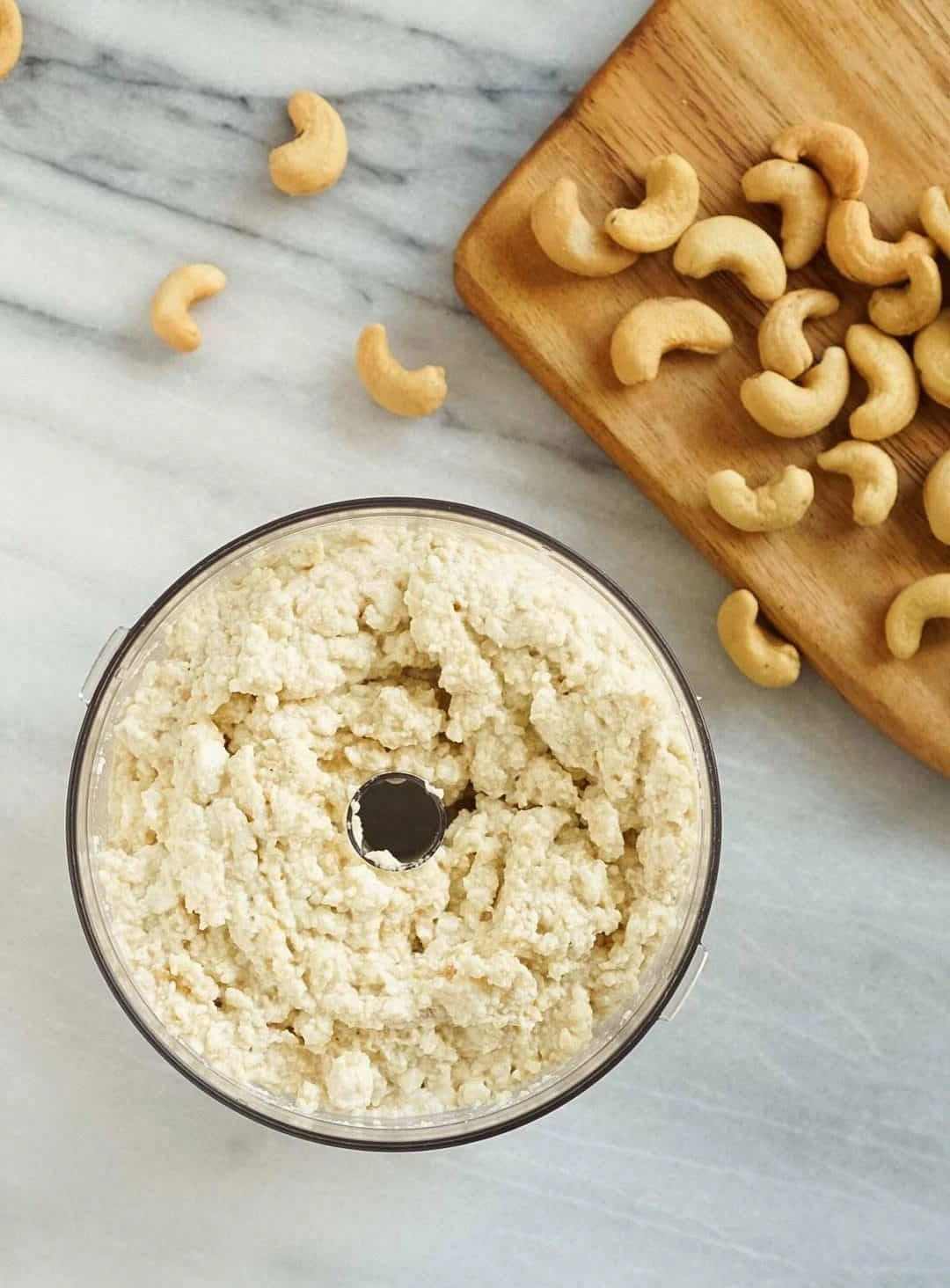
- Soak the cashews: Rinse the cashews under cold water, then soak them in hot water for 10 minutes. A longer soak (30 minutes) will yield an even silkier texture. Drain and pat them dry with a paper towel. If you’re short on time, you can skip the soak, but the ricotta will be slightly chunkier.
- Blend the base: Add the pressed tofu, soaked cashews, roasted garlic hummus, nutritional yeast, lemon juice, and salt to a high‑speed blender. Pulse until the mixture is smooth and silky. If the blend is too thick, add a tablespoon of water or plant milk to reach your desired consistency. The moment the mixture becomes a creamy paste is pure magic.
- Taste and adjust: Sample the ricotta and tweak the seasoning. Add a pinch more salt if needed, or a splash more lemon juice for extra brightness. The ricotta should taste like a creamy, slightly tangy cheese with a hint of roasted garlic. This step ensures your final product is perfectly balanced.
- Watch out for separation: If the mixture starts to separate or become oily, simply pulse it again for a few seconds. This is a common trick that keeps the ricotta from becoming watery. Another trick is to add a teaspoon of agar‑agar or a small amount of cornstarch dissolved in water, but this is rarely necessary for this recipe.
- Transfer to a bowl: Spoon the ricotta into a clean bowl and cover it with plastic wrap. Let it rest at room temperature for 10 minutes to allow the flavors to meld. If you’re making it ahead of time, refrigerate immediately to keep it fresh.
- Use immediately: Spread the ricotta onto toasted baguette slices, swirl it into your favorite pasta sauce, or fold it into lasagna layers. The ricotta’s creamy texture makes it a versatile addition to many dishes. If you’re using it in a baked dish, spread it evenly to avoid uneven melting.
- Store for later: Place the remaining ricotta in an airtight container and refrigerate. It will keep for up to 7 days, and if you freeze it, it can last up to 3 months. When reheating, add a splash of plant milk and stir until smooth. That tiny splash of liquid is the secret to restoring its silky texture.
That's it — you did it. But hold on, I've got a few more tricks that'll take this to another level…
Insider Tricks for Flawless Results
The Temperature Rule Nobody Follows
Keep your blender cool: Blend at a moderate speed and pause every 30 seconds to let the motor cool. Overheating can cause the mixture to separate, ruining the silky finish. If you notice the blender getting hot, add a splash of cold water to the mixture to keep it chilled.
Why Your Nose Knows Best
Smell the ricotta as you go: The aroma of toasted cashews and roasted garlic should be fragrant and inviting. If the smell feels flat, add a pinch more nutritional yeast or a splash of lemon juice. Your nose is a reliable indicator of flavor balance.
The 5-Minute Rest That Changes Everything
Let it sit: After blending, let the ricotta rest for 5 minutes before tasting. This short rest allows the flavors to meld, giving you a more accurate assessment of seasoning. Many cooks skip this step, but the difference in taste is noticeable.
The Secret to a Non‑Oily Finish
Use a low‑fat hummus: A low‑fat hummus reduces the overall oil content, preventing the ricotta from becoming greasy. If you prefer a richer texture, use a full‑fat hummus but be prepared to adjust the amount of lemon juice to counterbalance the oil.
How to Keep It Creamy When Frozen
Freeze in small portions: Portion the ricotta into 1‑cup servings before freezing. This allows you to thaw only what you need, preserving texture and flavor. When reheating, add a teaspoon of plant milk and blend briefly to restore creaminess.
The Quick Fix for a Chunky Ricotta
Pulse instead of blend: If you prefer a slightly chunkier ricotta, pulse the ingredients in the blender instead of blending on high speed. This gives a rustic texture that’s great for topping salads or stuffing into vegetables.
Creative Twists and Variations
This recipe is a playground. Here are some of my favorite ways to switch things up:
Herb‑Infused Ricotta
Swap in fresh herbs: Add a handful of chopped basil, oregano, or thyme to the blender for a Mediterranean twist. The herbs infuse the ricotta with bright, green notes that pair well with tomato sauces. This variation is perfect for a summer pasta dish.
Spicy Sriracha Ricotta
Introduce heat: Stir in a tablespoon of sriracha or chili paste to give the ricotta a fiery kick. The heat balances the richness and adds depth to baked dishes like stuffed shells. Serve with a drizzle of lime juice for extra zing.
Smoky Chipotle Ricotta
Use chipotle powder: Blend a teaspoon of chipotle powder into the mixture for a smoky, earthy flavor. This version works wonderfully in Mexican‑inspired tacos or as a spread on corn tortillas. The smoky undertone elevates the ricotta beyond its usual profile.
Sweet Maple Ricotta
For a dessert twist: Replace the lemon juice with a tablespoon of maple syrup and add a pinch of cinnamon. The sweet ricotta is delicious on pancakes, waffles, or as a topping for fruit parfaits. It’s a playful way to enjoy ricotta without dairy.
Chocolate‑Nut Ricotta
Blend in cocoa: Add two tablespoons of unsweetened cocoa powder and a drizzle of maple syrup for a chocolatey ricotta. This variation is a decadent spread for toast or a creamy filling for pastries. The nutty base complements the chocolate flavor beautifully.
Savory Mushroom Ricotta
Incorporate sautéed mushrooms: Stir in sautéed mushrooms and a splash of soy sauce for a umami‑rich ricotta. This version is great as a topping for roasted vegetables or as a filling for savory pies. The earthy mushrooms add depth and a comforting aroma.
Storing and Bringing It Back to Life
Fridge Storage
Keep it airtight: Store the ricotta in a sealable container in the refrigerator for up to 7 days. The airtight seal prevents the ricotta from absorbing odors from other foods. Before using, give it a quick stir to restore its creamy texture.
Freezer Friendly
Freeze in portions: Divide the ricotta into 1‑cup servings and place them in a freezer bag. Label each bag with the date for easy reference. The ricotta can be frozen for up to 3 months without losing quality.
Best Reheating Method
Gentle heat: Reheat the ricotta in a saucepan over low heat, stirring frequently. Add a splash of plant milk or water to keep it from drying out. The gentle heat restores the ricotta’s silky mouthfeel, making it ready for use in any dish.
And that’s the full journey from tofu block to a luscious ricotta that will make your taste buds sing. Whether you’re using it in a classic lasagna, spreading it on crusty bread, or whisking it into a creamy pasta sauce, this ricotta is the secret weapon you’ve been missing. The best part? It’s vegan, incredibly simple, and can be made in under half an hour. Give it a try tonight and watch your kitchen transform into a flavor laboratory. I dare you to taste it and not go back for seconds—because once you experience that silky, nutty, and slightly tangy bite, you’ll wonder why you ever settled for anything else.