It started with a catastrophic sugar explosion that left my kitchen smelling like burnt caramel and my living room covered in a glittering glaze of crumbs. I had been attempting a simple tart, but the dough had turned into a rubbery slab that refused to rise. I stared at the mess, feeling the heat of the oven and the sting of disappointment. Then I remembered the story my grandmother told me about her “tarte aux fraises” that could turn any gloomy afternoon into a celebration. That memory sparked a fierce determination to recreate that magic in my own kitchen.
I pulled the fresh strawberries from the fridge and their bright red skins glistened like tiny rubies against the white counter. The air was thick with the sweet, almost citrusy scent of ripe fruit, a smell that instantly pulled my mind back to summer afternoons spent picking berries. The sound of the oven timer ticking was a metronome for my nerves, and the feel of the dough between my fingers was a tactile promise of something delicious. I could almost taste the buttery, flaky crust mingling with the silky pastry cream and the burst of strawberry juice. That sensory tapestry was what I was about to weave into a dish that would outshine any other tart.
What makes this version stand out is not just the combination of flavors but the meticulous balance of textures and the way each component enhances the next. The crust is buttery and crisp, with a tender crumb that melts in your mouth like a cloud. The pastry cream is silky, rich, and not overly sweet, letting the strawberries shine without being overwhelmed. The strawberries themselves are sliced thin enough to release their juices but thick enough to hold their shape. The optional apricot glaze adds a glossy sheen and a subtle tartness that elevates the overall experience. And the technique—blind baking the crust, using egg yolks for both the dough and the cream—creates a depth of flavor that feels both classic and innovative.
I dare you to taste this and not go back for seconds. Picture yourself pulling this out of the oven, the whole kitchen smelling incredible, and seeing that golden crust glistening under the oven light. The first bite is a revelation: buttery, crisp, creamy, and bursting with fresh strawberry sweetness. And if you’ve ever struggled with a tart that turns out soggy or a cream that curdles, you’re not alone—this recipe has the fix. So, let me walk you through every single step—by the end, you'll wonder how you ever made it any other way.
What Makes This Version Stand Out
- Flavor: The combination of buttery crust, velvety pastry cream, and juicy strawberries creates a layered taste that is both comforting and celebratory.
- Texture: The crust is crisp on the outside, tender on the inside, and the cream has a silkiness that coats the tongue without clinging.
- Simplicity: Each component can be made ahead, and the assembly takes less than 10 minutes, making it perfect for spontaneous gatherings.
- Uniqueness: The optional apricot glaze adds a glossy finish and a subtle tang that sets this tart apart from ordinary strawberry desserts.
- Crowd Reaction: Guests will applaud the professional finish and the way the flavors dance together, making this a conversation starter.
- Ingredient Quality: Using fresh, high‑quality strawberries and real vanilla bean gives the tart an authentic French elegance.
- Cooking Method: Blind baking the crust and using egg yolks for both dough and cream ensures a cohesive flavor profile and optimal texture.
- Make‑Ahead Potential: The crust can be baked and cooled days in advance, the cream can be refrigerated, and the assembled tart will stay fresh for 24 hours.
Alright, let's break down exactly what goes into this masterpiece. The secret lies in each step, from the dough’s first kiss with butter to the final brush of apricot glaze. Keep an eye on the details, and the result will be a tart that feels like a slice of Parisian sunshine.
Inside the Ingredient List
The Flavor Base
All-purpose flour is the backbone of the crust, providing structure and a neutral canvas that lets the butter and sugar shine. It absorbs the butter’s fat, creating a flaky texture when rolled and baked. Skipping the flour would result in a crumbly, unstructured base that would collapse under the weight of the filling. For the best results, sift the flour to eliminate lumps and aerate it, giving the crust a lightness that feels almost airy.
The Texture Crew
Unsalted butter is the star of the texture crew, delivering richness and a tender crumb. Cold, cubed butter is essential; it creates steam pockets during baking that puff the crust into a delicate lattice. Granulated sugar balances the butter’s richness and caramelizes slightly, giving the crust a subtle crunch. Egg yolks act as a binder, holding the dough together and adding a silky sheen to the finished product. If you omit the yolks, the crust will be dry and crumbly.
The Unexpected Star
Fresh strawberries are the unexpected star that turns an ordinary tart into a showstopper. Their bright red color and natural sweetness create a visual and gustatory contrast against the buttery crust and creamy filling. When sliced thinly, they release juice that caramelizes slightly on the heat of the oven, adding depth. Choosing ripe, firm strawberries will prevent a soggy center, while under-ripe ones will taste tart and underdeveloped.
The Final Flourish
Whole milk provides the base for the pastry cream, giving it a silky, smooth texture that coats the palate. Granulated sugar sweetens the cream without overpowering the fruit, allowing the vanilla to shine through. Vanilla bean or extract adds warmth and aromatic complexity, a hallmark of French pastry. Apricot jam, optional but highly recommended, gives a glossy sheen and a subtle sweet‑tart finish that ties the whole tart together. If you skip the jam, the strawberries will still shine, but the tart will lack that final, glossy pop.
Everything's prepped? Good. Let's get into the real action and start baking.
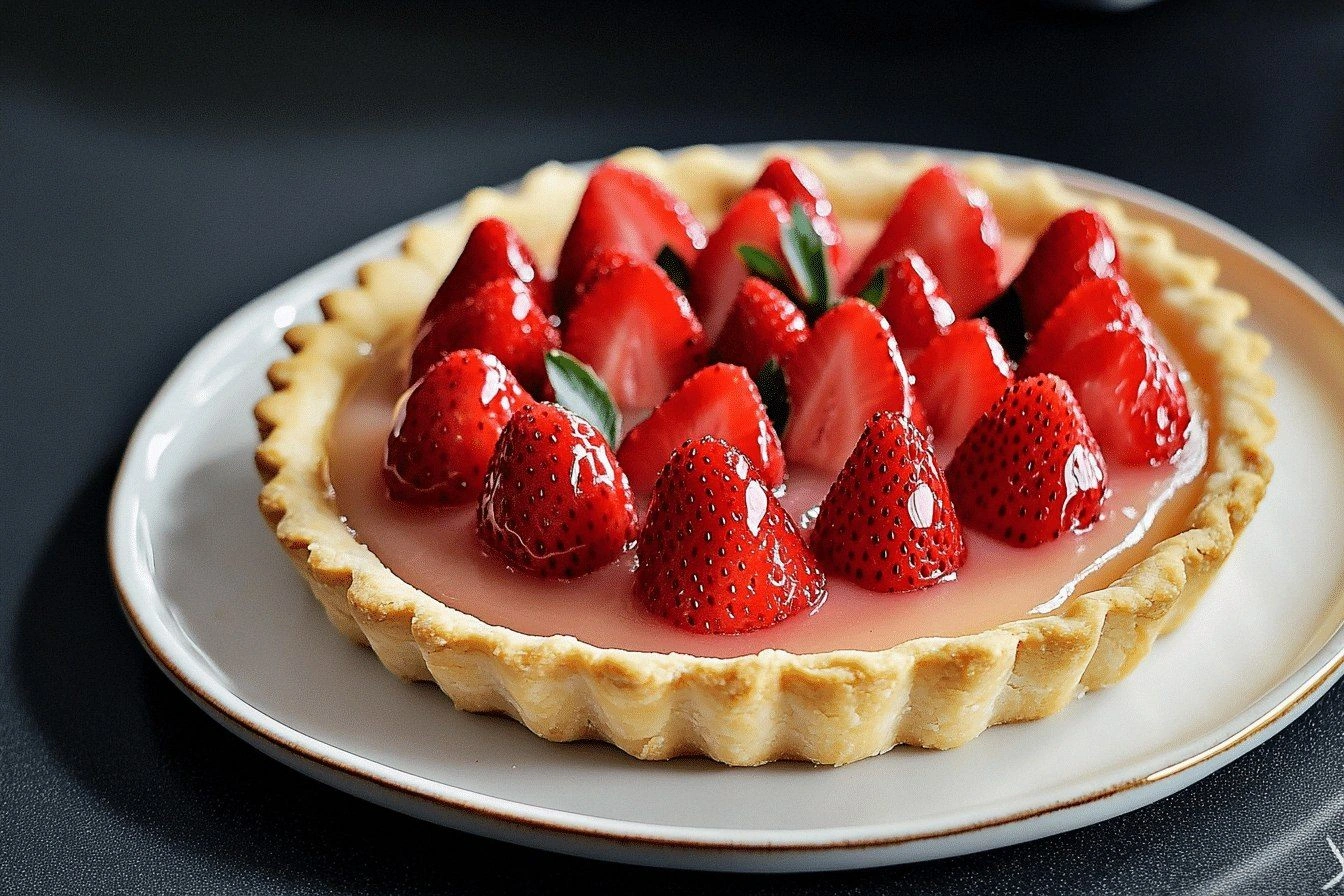
The Method — Step by Step
- Preheat your oven to 375°F (190°C). In a large bowl, whisk together 2 cups of all-purpose flour, 1/3 cup granulated sugar, and 1/2 teaspoon salt. The flour and sugar will form the base of your crust, while the salt balances the sweetness.
- Add 1 cup of cold, cubed unsalted butter to the dry mixture. Using a pastry cutter or your fingertips, cut the butter into the flour until the mixture resembles coarse crumbs. The cold butter creates steam pockets that puff the crust into a flaky structure.
- Add 2 egg yolks to the mixture and stir until a cohesive dough forms. The yolks bind the ingredients and add a subtle richness. If the dough feels too dry, add a tablespoon of cold water to bring it together.
- Wrap the dough in plastic wrap and refrigerate for 30 minutes. Chilling the dough relaxes the gluten, making it easier to roll out and preventing shrinkage during baking.
- On a lightly floured surface, roll the dough into a circle large enough to fit a 9‑inch tart pan. Transfer the dough to the pan, pressing it into the corners and trimming any excess. Prick the bottom of the crust with a fork to prevent bubbling.
- Blind bake the crust for 15 minutes, or until it turns a light golden brown. This step ensures the crust remains crisp when you add the creamy filling. Remove from the oven and let it cool completely on a wire rack.
- While the crust cools, prepare the pastry cream. In a medium saucepan, whisk together 2 egg yolks, 1/4 cup granulated sugar, and 1 vanilla bean (split and scraped) or 1 teaspoon vanilla extract. This mixture will form the base of your silky filling.
- Heat 1 cup of whole milk in a saucepan until it just begins to steam—do not let it boil. Slowly pour the hot milk into the egg yolk mixture, whisking constantly to temper the eggs and prevent curdling. This delicate process is crucial for a smooth cream.
- Return the mixture to the saucepan and cook over low heat, stirring constantly with a wooden spoon, until the custard thickens enough to coat the back of the spoon. The custard should reach 170°F (77°C) on a thermometer. Remove from heat and strain through a fine sieve to eliminate any lumps.
- Transfer the thickened custard to a bowl, cover with plastic wrap pressed directly onto the surface to prevent a skin from forming, and refrigerate until chilled. The custard should be cold enough to spread easily but not frozen.
- Spread the chilled pastry cream evenly over the cooled crust with a spatula. Arrange 2 cups of sliced fresh strawberries on top of the cream, fanning them out so that each bite gets a burst of fruit.
- If using apricot jam, heat 2 tablespoons of jam with 1 tablespoon of water in a small saucepan until it becomes syrupy. Brush the glaze over the strawberries, giving the tart a glossy, caramelized finish.
- Refrigerate the assembled tart for at least 30 minutes before serving. This resting period allows the flavors to meld and the crust to firm up, ensuring a clean slice.
That's it—you did it. But hold on, I've got a few more tricks that'll take this to another level. Each of these tips will help you avoid common pitfalls and elevate the final presentation.
Insider Tricks for Flawless Results
The Temperature Rule Nobody Follows
Many bakers assume any oven temperature works, but a precise 375°F (190°C) is essential for a golden crust. If your oven runs hot, rotate the tart halfway through baking. This trick ensures even browning and prevents the edges from burning while the center remains pale.
Why Your Nose Knows Best
The aroma of the crust baking is a reliable indicator of readiness. When the scent is nutty and buttery, the crust is done. A strong, sweet smell signals that the sugar has caramelized, giving the base a delightful crunch.
The 5‑Minute Rest That Changes Everything
After blind baking, let the crust rest for 5 minutes before removing it from the pan. This pause allows the steam to settle, preventing the crust from cracking when you transfer it to the cooling rack.
The Quick Chill Trick
If you’re short on time, place the chilled pastry cream in the freezer for 10 minutes before spreading it. This makes the cream easier to spread without it melting into the crust.
The Perfect Glaze Consistency
When glazing with apricot jam, add a splash of lemon juice to cut the sweetness. This balances the flavors and gives the glaze a glossy sheen that catches the light.
Creative Twists and Variations
This recipe is a playground. Here are some of my favorite ways to switch things up:
Berry Medley Madness
Swap the strawberries for a mix of raspberries, blueberries, and blackberries. The variety of textures and flavors will turn the tart into a colorful, multi‑berry masterpiece that appeals to every palate.
Chocolate‑Infused Delight
Add 1/4 cup of melted dark chocolate to the pastry cream for a rich, velvety chocolate flavor. The chocolate pairs beautifully with the tartness of the strawberries and creates a dessert that feels indulgent.
Lemon‑Zest Surprise
Grate a teaspoon of lemon zest into the pastry cream and use a lemon glaze instead of apricot. The citrus brightness lifts the sweetness and adds a refreshing note that’s perfect for summer.
Almond Crumble Crunch
Top the finished tart with a sprinkle of toasted almond slivers. The crunch adds a delightful contrast to the creamy filling and the buttery crust.
Vegan Version
Use a plant‑based butter substitute, coconut milk for the custard, and a vegan egg replacer. The result is a deliciously creamy tart that’s suitable for dairy‑free guests.
Storing and Bringing It Back to Life
Fridge Storage
Store the assembled tart in the refrigerator for up to 24 hours. Keep it covered with plastic wrap to prevent the crust from drying out. The flavors will deepen, making each slice even more enticing.
Freezer Friendly
For longer storage, freeze the tart in a tightly sealed container for up to 2 weeks. Thaw overnight in the refrigerator before serving. The texture remains crisp, and the cream stays silky.
Best Reheating Method
To reheat, preheat your oven to 300°F (150°C) and bake the tart for 10 minutes. If the crust feels dry, lightly mist it with water before baking. Adding a splash of water before reheating steams the crust back to perfection, keeping it from becoming brittle.