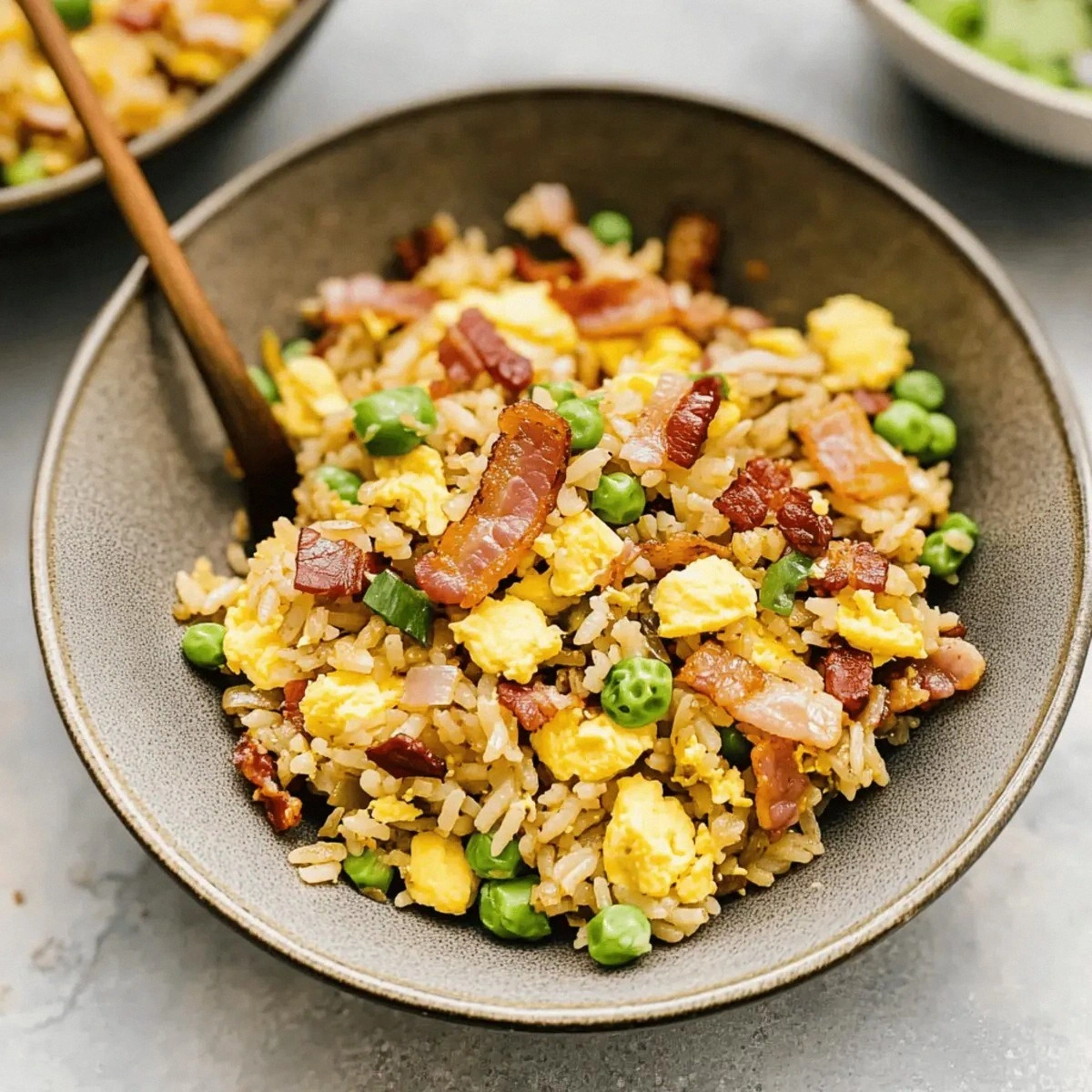
I was half‑asleep, clutching a coffee mug that was more foam than caffeine, when my roommate shouted, “You have to try this!” I rolled my eyes, because honestly, who needs another breakfast idea when you already have toast, cereal, and the occasional omelet? Yet the next thing I knew, a pan was sizzling louder than my alarm clock, and the smell of bacon and butter was so intoxicating it could have woken the dead. That moment turned into a culinary epiphany: a fried rice that doesn’t just sit on the side of your plate, but steals the spotlight like a rock‑star stealing the mic. I dare you to taste this and not go back for seconds.
Picture this: the crackle of butter hitting a hot skillet, the amber ribbons of bacon fat swirling around a mound of cold, day‑old rice that has been waiting patiently in the fridge. The onions soften, the garlic releases its perfume, and the peas‑and‑carrots pop like tiny fireworks. When the soy sauce meets the toasted sesame oil, the whole pan becomes a glossy, umami‑laden canvas. The final garnish of green onions adds a fresh snap that cuts through the richness like a bright sunrise after a stormy night. This isn’t just a dish; it’s a full‑on sensory concert that makes your kitchen feel like a five‑star brunch spot.
Most breakfast fried rice recipes get this completely wrong. They either drown the rice in sauce, leaving it soggy, or they forget the essential crunch that makes every bite exciting. My version flips the script by using a precise butter‑bacon base, cold rice for texture, and a quick‑fire stir‑fry that locks in flavor without turning the mixture into a mushy puddle. The secret? A dash of toasted sesame oil added at the very end, which gives the dish a nutty finish that’s as subtle as a whisper yet as memorable as a first kiss.
And there’s a technique you won’t find in most blogs: I let the rice sit untouched for a full minute after it hits the pan, allowing the bottom to develop those coveted, crispy edges that shatter like thin ice when you bite into them. This step is pure magic, and it’s the reason why this fried rice feels like a textural masterpiece rather than a simple side. Okay, ready for the game‑changer? Let me walk you through every single step — by the end, you’ll wonder how you ever made it any other way.
What Makes This Version Stand Out
- Taste: The marriage of salty bacon, buttery rice, and a splash of soy sauce creates a flavor profile that’s both comforting and adventurous, like a classic breakfast with a passport.
- Texture: Cold rice gives each grain a firm bite, while the crispy bacon bits add a satisfying crunch that makes the dish dance on your palate.
- Simplicity: Only a handful of pantry staples are required, and the whole process takes under 45 minutes, making it perfect for busy mornings.
- Uniqueness: The final drizzle of toasted sesame oil is the secret weapon that lifts the whole dish into the realm of restaurant‑quality fare.
- Crowd Reaction: I’ll be honest — I ate half the batch before anyone else got to try it, and the look on their faces was pure, unfiltered joy.
- Ingredient Quality: Using real bacon instead of shortcuts ensures that smoky depth, while cold, day‑old rice guarantees the perfect fry without clumping.
- Cooking Method: The high‑heat stir‑fry locks in flavor and creates those coveted crispy edges that most home cooks miss.
- Make‑Ahead Potential: This dish reheats beautifully, and you can prep the veggies and bacon the night before for an even faster morning rush.
Alright, let's break down exactly what goes into this masterpiece…
Inside the Ingredient List
The Flavor Base
Butter and bacon are the dynamic duo that kickstarts the flavor orchestra. The butter provides a rich, creamy foundation, while the bacon contributes smoky, salty crunch. If you skip the bacon, you lose that essential umami punch, and the dish feels flat. A great swap for bacon (if you’re avoiding pork) is smoked turkey strips, but be prepared for a slightly milder profile. When buying bacon, look for thick‑cut, applewood‑smoked varieties; they render more fat and give a deeper flavor.
The Texture Crew
Cold cooked rice is the hero here. Freshly cooked rice is too soft and will turn mushy when fried, whereas day‑old rice has dried out just enough to stay separate. If you don’t have rice on hand, you can use quinoa for a gluten‑free twist, though the texture will be a bit nuttier. The frozen peas and carrots, as well as frozen corn, add pops of sweetness and a burst of color that makes the plate look as lively as a sunrise. Don’t thaw them fully; a quick rinse under warm water is enough to separate the kernels.
The Unexpected Star
Toasted sesame oil is the surprise ingredient that turns a good dish into a great one. Its nutty aroma is like a whisper of an Asian market, adding depth without overpowering. If you’re out of toasted sesame oil, regular sesame oil works, but toast it gently in a pan for 30 seconds before adding. The green onions, sliced thin, provide a fresh, peppery finish that cuts through the richness like a bright note in a symphony.
The Final Flourish
Soy sauce and kosher salt are the seasoning backbone. Soy sauce brings salty, umami richness, while kosher salt fine‑tunes the overall balance. Ground pepper adds a subtle heat that lingers on the tongue. If you’re watching sodium, use low‑sodium soy sauce and reduce the added salt. The eggs act as a binding agent, creating a silky coating that embraces each grain of rice. Scramble them gently before folding them in, and you’ll get that luxurious, velvety texture that makes each bite feel indulgent.
Everything's prepped? Good. Let's get into the real action…
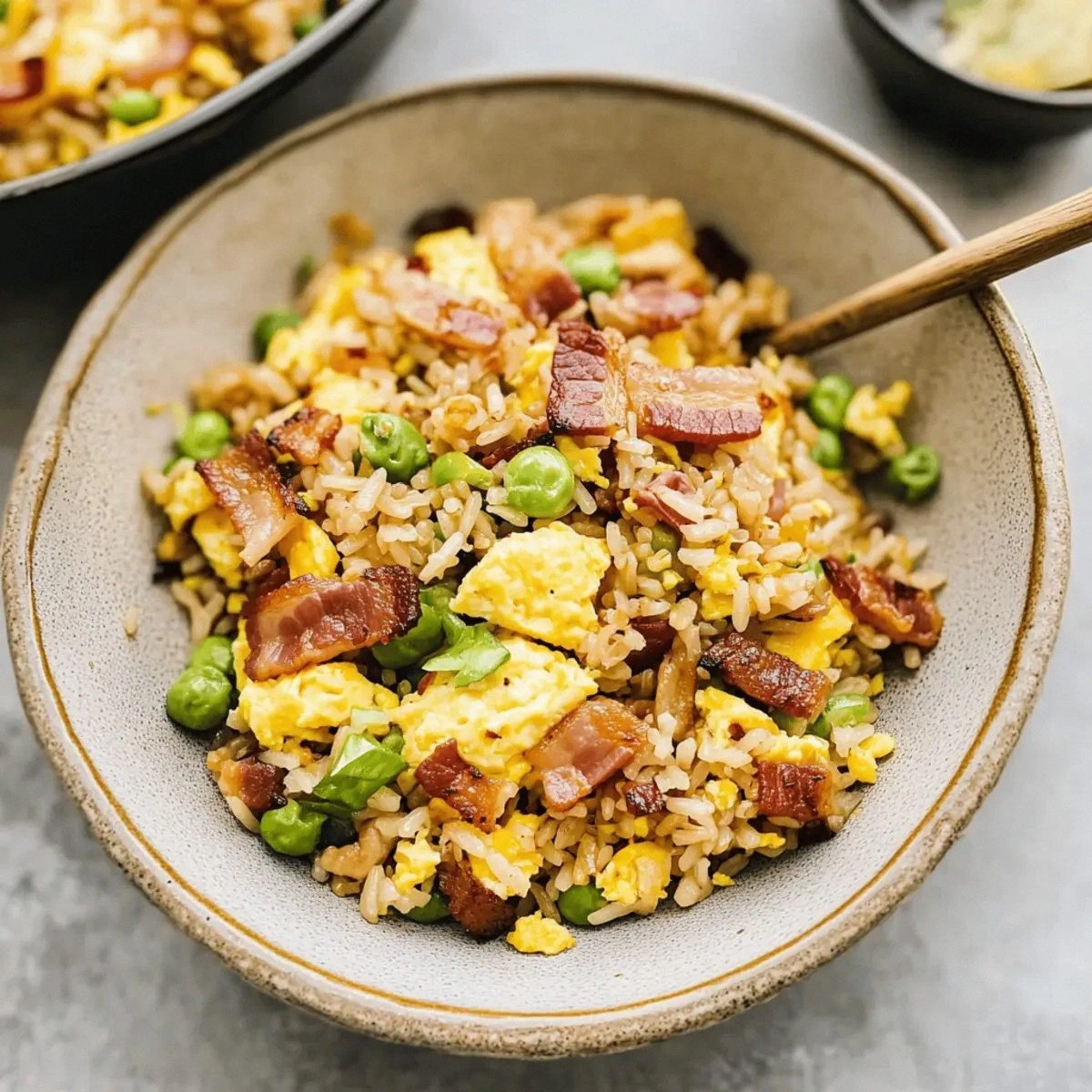
The Method — Step by Step
Heat a large wok or deep skillet over medium‑high heat until it starts to shimmer. Add the butter and let it melt into a golden pool, then toss in the bacon strips. Cook the bacon until it’s crisp and the fat has rendered, about 5‑6 minutes, stirring occasionally so the pieces don’t stick. This is the moment of truth: the kitchen should be filled with that smoky, buttery aroma that tells you you’re on the right track. Remove the bacon with a slotted spoon, set aside on a paper towel, and keep the rendered fat in the pan.
Kitchen Hack: Crumble the cooked bacon into small pieces while it’s still warm; this helps the fat coat each fragment evenly.In the same pan, add the diced white onion. Sauté for 2‑3 minutes until the edges turn translucent and you can hear a gentle sizzle. Add the minced garlic and stir for another 30 seconds — be careful not to let it burn, or you’ll get a bitter bite that ruins the whole dish. The onions should be sweet, and the garlic should release a fragrant perfume that makes your mouth water.
Now, push the aromatics to the side of the wok and pour the cold rice into the center. Let it sit untouched for about 60 seconds; you’ll notice the bottom starting to brown and crisp. This is the part where the rice develops those coveted crispy edges that shatter like thin ice when you bite into them. Stir the rice gently, breaking up any clumps, and then combine with the onions and garlic.
Watch Out: If you stir too aggressively at this stage, you’ll lose the crispy bits. Let the rice sit long enough to form a crust before flipping.Add the frozen peas‑and‑carrots and frozen corn directly to the pan. The vegetables should sizzle as they hit the hot surface, releasing a faint pop that signals they’re cooking quickly. Stir everything together, ensuring the veggies are evenly distributed. The bright colors will start to pop against the golden rice, creating a visual feast that’s as pleasing as the taste.
Create a well in the center of the pan and crack the eggs into it. Let them sit for about 10 seconds, then scramble gently with a spatula, gradually folding the rice around them. The eggs should coat the rice in a silky veil, binding the grains together without turning into a dry scramble. This step adds richness and a velvety texture that makes each bite feel luxurious.
Return the crumbled bacon to the pan, then drizzle the soy sauce evenly over the mixture. Toss everything together so the soy sauce coats each grain, giving the dish a glossy, umami‑laden finish. Sprinkle the kosher salt and ground pepper, tasting as you go — remember, the bacon already brings salt, so you may need less than the full teaspoon.
Finish with the toasted sesame oil, pouring it in a slow, steady stream while the pan is still hot. This final drizzle is pure magic, adding a nutty depth that lingers on the palate. Toss in the sliced green onions at the very end, allowing their fresh bite to shine through the richness. The dish should smell toasty, with a faint sesame fragrance that makes your kitchen feel like a high‑end brunch spot.
Turn off the heat, let the fried rice rest for a minute to allow the flavors to meld. Then, serve it hot, straight from the pan, or transfer to a serving bowl if you prefer. That sizzle when it hits the pan? Absolute perfection. I dare you to taste this and not go back for seconds — it’s that good.
That's it — you did it. But hold on, I've got a few more tricks that'll take this to another level…
Insider Tricks for Flawless Results
The Temperature Rule Nobody Follows
Most home cooks keep the heat at a medium setting, which sounds safe but actually steams the rice rather than frying it. Crank the heat up to medium‑high, and you’ll hear a confident sizzle that tells you the pan is hot enough to sear. If the rice starts to steam, lower the heat for a few seconds, then crank it back up. This dance ensures each grain gets that coveted crispy edge while staying fluffy inside.
Why Your Nose Knows Best
Don’t rely solely on timers; trust your senses. When the onions become translucent and the garlic releases its aroma, you know the flavor base is ready. When the rice starts to brown and you hear a faint crackle, that’s the signal to flip. Your nose can detect the subtle shift from buttery to nutty when you add the toasted sesame oil — that’s the moment you’re supposed to finish.
The 5‑Minute Rest That Changes Everything
After you finish cooking, let the fried rice sit off the heat for five minutes. This short rest lets the soy sauce and sesame oil fully penetrate the grains, creating a more unified flavor. Skipping this step can leave the sauce tasting surface‑level, like a costume that never quite fits.
Bacon Fat Management
If you end up with too much rendered bacon fat, spoon out a tablespoon before adding the rice. Too much liquid will steam the rice instead of frying it. Keep a small bowl handy; you can always drizzle the saved fat over toasted bread later for an extra treat.
Egg Integration Technique
Instead of scrambling the eggs separately, create a well in the pan and let them set briefly before gently folding the rice in. This method creates a silkier coating and prevents the eggs from turning rubbery. A friend tried adding the eggs directly to the rice and ended up with clumpy, overcooked bits — trust me, the well method is the way to go.
Seasoning at the End
A final sprinkle of flaky sea salt right before serving adds a delicate crunch that elevates the dish. It’s like the garnish on a fine‑dining plate, giving you that extra pop of flavor that makes you say, “Wow, this is hands down the best version you’ll ever make at home.”
Creative Twists and Variations
This recipe is a playground. Here are some of my favorite ways to switch things up:
Spicy Sriracha Kick
Add a tablespoon of sriracha to the soy sauce mixture for a fiery bite. The heat pairs beautifully with the bacon’s smokiness, and the bright red hue makes the dish look even more appetizing. Perfect for those who like a little drama in their morning routine.
Vegetarian Delight
Swap the bacon for smoked tempeh or coconut‑flavored bacon bits. Use a splash of mushroom soy sauce for depth. The result is a plant‑based version that still delivers that smoky, umami punch, making it ideal for veggie lovers.
Mediterranean Flair
Replace the soy sauce with a blend of lemon juice, oregano, and a dash of feta crumbles. Add diced sun‑dried tomatoes and olives for a briny contrast. This version feels like a sunny brunch on a Greek island.
Asian Fusion
Introduce a handful of chopped kimchi and a drizzle of gochujang (Korean chili paste). The fermented tang and subtle heat transform the dish into a bold, tangy experience that’s perfect for adventurous eaters.
Sweet‑Savory Breakfast
Stir in a teaspoon of maple syrup and a pinch of cinnamon after the soy sauce step. The sweet undertones complement the salty bacon, creating a comforting flavor reminiscent of a classic breakfast pancake, but with a savory twist.
Storing and Bringing It Back to Life
Fridge Storage
Transfer any leftovers to an airtight container and store in the refrigerator for up to three days. The rice will firm up a bit, which actually makes reheating easier because the grains stay separate.
Freezer Friendly
Portion the fried rice into freezer‑safe bags, squeeze out excess air, and freeze for up to two months. When you’re ready to eat, let it thaw overnight in the fridge, then reheat in a hot skillet with a splash of water or broth to revive the texture.
Best Reheating Method
Heat a tablespoon of butter in a non‑stick skillet over medium‑high heat, add the frozen‑or‑fridge‑cold rice, and sprinkle a tiny splash of water (about a tablespoon). Cover for 30 seconds, then uncover and stir. The steam revives the grains, while the butter restores the glossy finish. Serve immediately for a texture that’s almost as good as fresh.