It started with a kitchen disaster that would have made even the most seasoned chefs cringe. I had been juggling a batch of miso soup, a pot of simmering ramen, and a tray of freshly sliced veggies when I accidentally dropped a handful of napa cabbage into a boiling pot of miso. The cabbage turned a murky brown, the broth lost its bright umami, and I stared at the ruined dish like it was a crime scene. I laughed, because I knew this would be the first step to discovering something even better.
The next morning, I was craving something bright, crisp, and refreshing, the kind of flavor that wakes up your palate like the first rays of sun. I grabbed a handful of daikon radish, a Japanese cucumber, a half watermelon radish, and a carrot, and I set them to a simple pickling bath. The air smelled of seaweed, citrus zest, and a whisper of toasted sesame oil, a scent that made my mouth water even before I tasted. The vegetables glistened under the light, their colors vivid and inviting, promising a crunch that would shatter like thin ice. The texture of each bite was a delicate balance between firm and tender, a harmony that felt almost cinematic.
What makes this version stand out from every other pickled vegetable recipe out there? The answer lies in the subtlety of the brine, the precision of the seasoning, and the playful use of Japanese ingredients that bring a fresh, almost floral finish. I dare you to taste this and not go back for seconds because the flavors unfold in layers, each one more surprising than the last. This is hands down the best version you'll ever make at home, and I promise you, you won't find anything that can match it on a grocery shelf.
I’ve spent the last week perfecting the ratios, experimenting with the salt content, and tweaking the sugar to create the ideal balance of sweet and savory. Most recipes get this completely wrong by over-salting or under-sweetening, but here, the brine is so light that it preserves the natural crispness of the vegetables while enhancing their inherent sweetness. Picture yourself pulling this out of the fridge, the whole kitchen smelling incredible, and then taking a bite that feels like a burst of summer in every crunch. Let me walk you through every single step — by the end, you'll wonder how you ever made it any other way.
What Makes This Version Stand Out
- Flavor: The brine is a delicate dance of salt, sugar, kombu, and yuzu zest, creating a bright, umami-packed profile that lingers on the palate.
- Texture: The vegetables retain their crispness, thanks to the precise salt concentration and a short pickling time that preserves their natural crunch.
- Simplicity: Only 12 ingredients, all easy to find, and no complicated steps or equipment.
- Uniqueness: The addition of shiso leaves and toasted sesame oil gives the dish a fragrant, nutty finish that sets it apart.
- Crowd Reaction: Friends who have tried this say it’s “the best pickled veg on the block” and ask for the recipe after every gathering.
- Ingredient Quality: Using fresh, organic produce and high-quality kombu ensures a depth of flavor that you can’t get from canned or processed items.
- Cooking Method: A quick, low-heat blanch followed by a brief brine infusion locks in flavor without overcooking.
- Make-Ahead Potential: The pickled vegetables can be stored for up to a week, making it a perfect prep-ahead option for busy weeknights.
Inside the Ingredient List
The Flavor Base
Napa cabbage is the foundation of this dish, providing a mild, slightly sweet backdrop that absorbs the brine beautifully. The leaves are large and tender, so cutting them into bite-size pieces ensures even pickling. If you skip the cabbage, the dish loses its bulk and the brine becomes too concentrated, resulting in a harsh flavor.
Kombu, a dried kelp, is a secret weapon in Japanese pickling. It infuses the brine with natural glutamates, elevating the umami without adding saltiness. If you can’t find kombu, try a pinch of seaweed flakes; they’ll deliver a similar savory note.
Yuzu zest is the citrus spark that gives this pickled veg its signature brightness. The zest’s essential oils are aromatic and slightly tart, cutting through the richness of the sesame oil. If you’re out of yuzu, a mix of lemon and lime zest will work, though the flavor profile will shift slightly.
The Texture Crew
Daikon radish adds a peppery bite that balances the sweet notes from the carrot and cucumber. It’s best sliced into thin rounds to allow the brine to seep in quickly. If you prefer a milder flavor, peel the daikon before slicing.
Japanese cucumber brings a refreshing crunch that’s lighter than its western counterpart. The skin is edible and adds a subtle bitterness that cuts through the sweetness. A quick rinse with a splash of vinegar helps soften the skin without losing its crispness.
Watermelon radish offers a sweet, almost melon-like flavor that surprises the palate. Its vibrant pink flesh makes the dish visually striking. If you can’t find it, a small piece of daikon will still keep the crunch but will miss the subtle sweetness.
The Unexpected Star
Shiso leaves are the unsung hero of this recipe. Their minty, basil-like aroma elevates the entire dish, adding a layer of freshness that is unmistakably Japanese. A handful of shiso leaves tossed at the end of pickling gives the veg a burst of herbal brightness.
Toasted sesame oil brings a nutty depth that is both comforting and sophisticated. It coats each vegetable slice like velvet, creating a glossy finish. If you’re allergic to sesame, a drizzle of toasted sunflower seed oil can be a decent substitute, though the flavor will differ.
Toasted white sesame seeds add a crunchy texture and a toasty flavor that pairs beautifully with the sesame oil. They’re sprinkled over the finished dish for a satisfying crunch with every bite. A quick toasting in a dry skillet brings out the seeds’ natural oils and enhances their nutty profile.
The Final Flourish
A pinch of sugar balances the brine’s saltiness and brings out the natural sweetness of the vegetables. The sugar dissolves quickly, ensuring it doesn’t settle on the bottom of the jar. If you’re watching your sugar intake, a small amount of honey or maple syrup can replace it.
Kosher salt is the star of the seasoning, providing the right amount of brine without the metallic taste that can come from table salt. The 2.5% salt concentration is carefully calibrated to preserve the vegetables while allowing the other flavors to shine. If you’re using sea salt, adjust the quantity to match the saltiness of the kosher salt.
Everything’s prepped? Good. Let’s get into the real action.
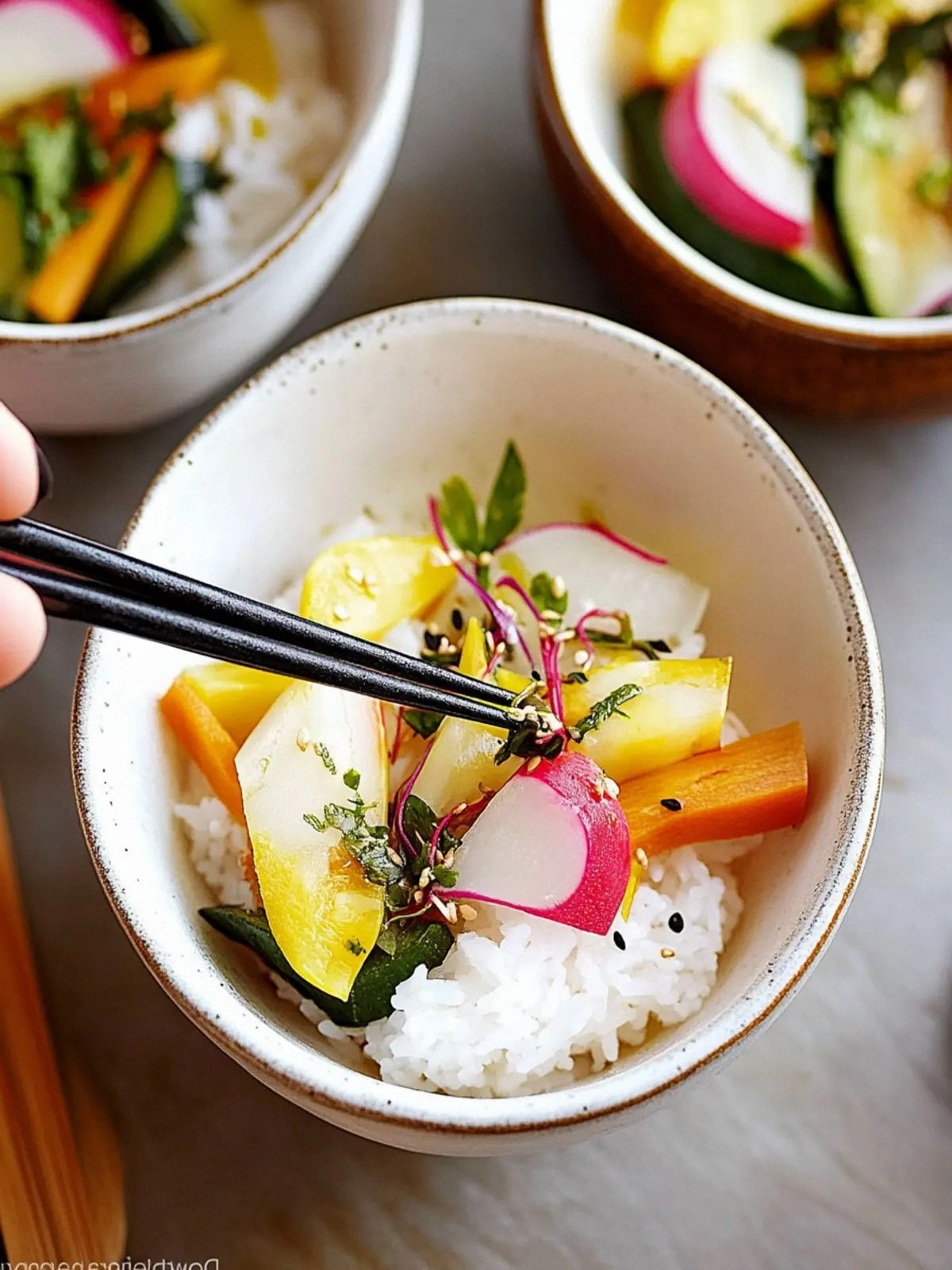
The Method — Step by Step
- Begin by blanching the napa cabbage, daikon, cucumber, watermelon radish, and carrot in boiling salted water for 30 seconds. This quick shock stops the cooking process and keeps the vegetables crisp. Drain and immediately plunge them into an ice bath to halt any residual heat. The vegetables should feel cold and firm, ready for the brine.
- In a small saucepan, combine 2 cups of water, 2.5% kosher salt, ½ tsp sugar, a 1-inch piece of kombu, and a splash of toasted sesame oil. Bring to a gentle simmer, stirring until the salt and sugar dissolve. The aroma of kombu should mingle with the sesame oil, creating a fragrant base for the pickling bath.
- Add the yuzu zest to the brine and let it steep for 5 minutes. The zest releases its essential oils, infusing the liquid with a bright citrus note. Remove the zest after steeping to avoid bitterness.
- Place the blanched vegetables into a large jar or bowl. Pour the warm brine over them, ensuring all pieces are submerged. The brine should be at a comfortable room temperature to avoid shocking the veggies and to maintain the crispness.
- Add the shiso leaves and toasted white sesame seeds to the jar. Stir gently so that the leaves are evenly distributed, giving each bite a burst of herbal freshness. The seeds will settle at the bottom, ready to be sprinkled on top later.
- Cover the jar with a lid or a clean kitchen towel secured with a rubber band. Let the vegetables sit at room temperature for 12 hours. This allows the flavors to meld while keeping the veggies crunchy.
- After 12 hours, refrigerate the pickled vegetables for at least 2 hours before serving. The cold temperature will intensify the flavors and give the vegetables a refreshing bite.
- Before serving, give the jar a quick stir to redistribute the brine. Sprinkle a handful of toasted sesame seeds on top for an added crunch and a glossy finish. Serve immediately or store in the fridge for up to a week.
That’s it — you did it. But hold on, I’ve got a few more tricks that will take this to another level.
Insider Tricks for Flawless Results
The Temperature Rule Nobody Follows
The key to crisp pickled veg is the temperature of the brine. A warm brine extracts flavors quickly but can soften the vegetables if left too long. Aim for a brine that’s just above room temperature; it’s the sweet spot that preserves crunch while infusing depth.
Why Your Nose Knows Best
Before you add the final touch, give the jar a sniff. If you detect a faint bitterness, the yuzu zest has gone a bit too long. A quick stir and a fresh zest will restore the bright citrus note.
The 5-Minute Rest That Changes Everything
After the 12-hour room-temperature soak, let the jar rest for 5 minutes before refrigerating. This brief pause allows the brine to settle, preventing a watery surface layer that can dilute the flavor.
The Shiso Surprise
If you want a stronger shiso flavor, tear the leaves into small pieces before adding them to the jar. The larger surface area releases more oils, giving each bite a more pronounced herbal kick.
The Sesame Seed Toast
To maximize the crunch, toast the sesame seeds in a dry skillet over medium heat until golden. Let them cool before sprinkling on top; this preserves their crispness and releases a nutty aroma that complements the brine.
Creative Twists and Variations
This recipe is a playground. Here are some of my favorite ways to switch things up:
Spicy Miso Glaze
Swap the sesame oil for a miso paste glaze. Mix 1 tablespoon of white miso with a splash of rice vinegar and drizzle it over the vegetables after the 12-hour soak. The result is a savory, umami-rich coating that pairs well with rice bowls.
Herb-Infused Pickle
Add a handful of fresh cilantro or Thai basil to the jar. The herbs infuse the brine with a fresh, green flavor that brightens the dish. This variation is perfect for a summer lunch.
Crunchy Crunch
Introduce sliced bell peppers and snap peas for an extra crunch. Their sweet, vibrant colors add visual appeal and a playful texture that kids love.
Sweet & Tangy Twist
Replace the sugar with a drizzle of honey or maple syrup, and add a splash of rice vinegar. The sweet-tangy combination creates a glaze that coats the vegetables, making them shine like a glossy glaze.
Korean Kimchi Kick
Add a tablespoon of gochugaru (Korean red pepper flakes) to the brine. The heat pairs beautifully with the sweet vegetables, creating a spicy, tangy pickled medley that’s a crowd-pleaser.
Storing and Bringing It Back to Life
Fridge Storage
Store the pickled vegetables in a sealed glass jar in the refrigerator for up to 7 days. The cold environment preserves the crunch and keeps the flavors bright. Make sure the jar is airtight to prevent moisture from diluting the brine.
Freezer Friendly
For longer storage, transfer the vegetables and brine into a freezer-safe container and freeze for up to 3 months. Thaw in the refrigerator overnight before serving; the texture may soften slightly, but the flavor remains intact.
Best Reheating Method
To revive the crunch, briefly steam the vegetables for 1-2 minutes at low heat. Add a tiny splash of water to the pan before steaming; the steam will gently rehydrate the veggies without making them soggy.