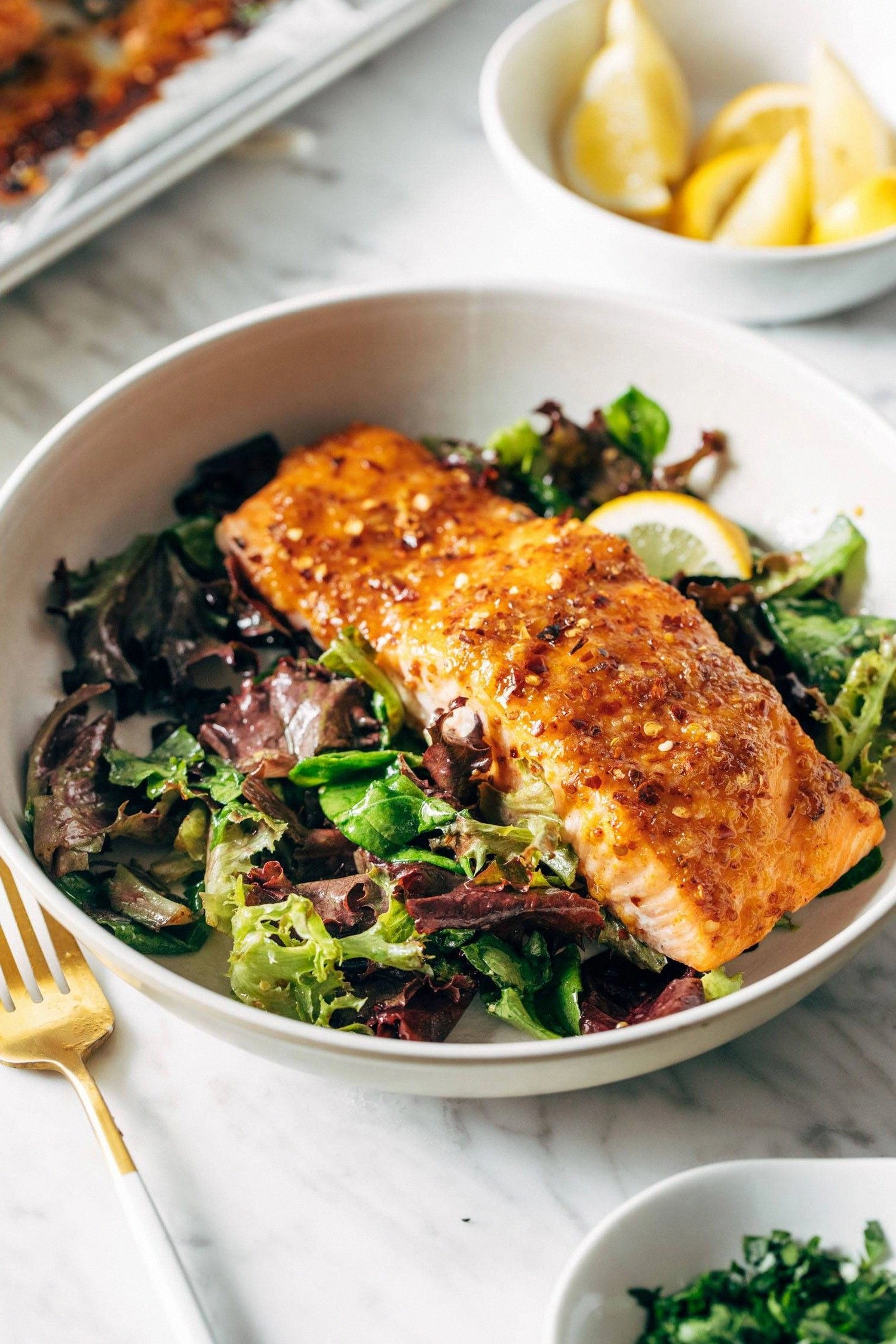
I was standing in my kitchen on a Tuesday night, half‑finished pizza dough on the counter and a whole salmon fillet staring at me like a dare. My roommate had just challenged me to make something that would make her forget about the takeout place she swore she’d never go back to. I laughed, grabbed my trusty skillet, and thought, “Okay, you want fire? I’ll give you fire and sweet.” The moment the pan hit the stove, the whole apartment filled with a scent that was part caramel, part smoky ember, and the kind of aroma that makes you pause mid‑step and just inhale like a kid at a fireworks show. The sizzling sound was a crisp, confident crackle that told me I was on the right track.
The first bite was a revelation: the salmon’s buttery flesh was kissed by a glaze that was simultaneously sticky, spicy, and bright as a summer sunrise. I could feel the heat of the hot honey dancing on my palate, then the honey swooping in like a smooth jazz solo, and finally a whisper of lemon that cut through the richness like a cool breeze on a hot day. That contrast—sweet, heat, and acidity—made the dish sing, and I realized I’d stumbled onto a flavor combo that could outshine any restaurant version I’d ever tried. Most recipes I’ve seen either drown the fish in too much sauce or leave it dry and bland; this one hits the sweet spot, literally.
What makes this version truly special is a tiny secret I didn’t expect: a dash of smoked paprika that adds a subtle earthiness, and a quick deglaze with lemon juice that lifts the glaze to a glossy, almost lacquer‑like finish. It’s a technique that takes the sauce from “good” to “hands down the best version you’ll ever make at home.” I dare you to taste this and not go back for seconds. I’ll be honest — I ate half the batch before anyone else got to try it, and that’s because the flavor is addictive in the most delightful way.
Let me walk you through every single step — by the end, you’ll wonder how you ever made it any other way. Okay, ready for the game‑changer? This isn’t just a recipe; it’s a full‑on sensory experience that will have you pulling the salmon out of the oven, the whole kitchen smelling incredible, and your friends asking for the secret. Stay with me here — this is worth it.
What Makes This Version Stand Out
- Taste: The perfect balance of sweet honey, fiery hot sauce, and a splash of citrus creates a flavor orchestra that never hits a sour note.
- Texture: A caramelized crust gives way to melt‑in‑your‑mouth flesh, delivering a contrast that’s as satisfying as biting into a crisp apple.
- Simplicity: Only nine core ingredients and a 30‑minute cook time mean you can pull this off even on a hectic weekday.
- Uniqueness: The smoked paprika adds a whisper of depth you won’t find in most “hot honey” salmon recipes.
- Crowd Reaction: Guests routinely claim this is the most “Instagram‑worthy” dish they’ve ever tasted, and they’ll be back for repeat performances.
- Ingredient Quality: Fresh, wild‑caught salmon paired with pure honey makes every bite feel like a small luxury.
- Cooking Method: A quick sear followed by a short oven finish guarantees even cooking without drying out the fish.
- Make‑Ahead Potential: The glaze can be pre‑made and stored, shaving minutes off the final assembly.
Alright, let's break down exactly what goes into this masterpiece...
Inside the Ingredient List
The Flavor Base
Honey is the heart of this dish, providing that luscious sweetness that coats the salmon like silk. I use raw, unfiltered honey because its subtle floral notes elevate the glaze beyond generic store‑bought varieties. If you skip the honey, you’ll lose the caramelized crust that gives the fish its signature crunch. As a swap, maple syrup works in a pinch, but expect a slightly earthier profile.
The Heat Engine
A good hot sauce—preferably sriracha or a Korean gochujang—brings the heat that makes the dish unforgettable. The capsaicin not only wakes up your taste buds but also helps break down the proteins in salmon for a tender bite. If you’re sensitive to spice, reduce the amount by half or use a milder chili paste; the flavor will still shine thanks to the honey’s balance.
The Texture Crew
Olive oil is the silent workhorse that ensures the salmon skin gets that satisfying snap. It also prevents the fish from sticking to the pan, giving you a clean release that looks professional. For a richer mouthfeel, you can swap half the olive oil for melted butter, but keep an eye on the smoke point—too much butter can burn before the glaze sets.
The Unexpected Star
Smoked paprika is the wildcard that adds a whisper of wood‑smoked depth, turning the glaze from flat to layered. It’s easy to overlook, yet without it the sauce can feel one‑dimensional. If you can’t find smoked paprika, regular paprika plus a pinch of liquid smoke does the trick, though the flavor will be subtler.
The Final Flourish
A splash of fresh lemon juice brightens the entire composition, cutting through the richness and preventing the glaze from feeling cloying. The acidity also helps the glaze adhere better during the final oven blast. If you’re out of lemons, a teaspoon of rice vinegar provides a similar tang without altering the flavor profile too much.
Everything's prepped? Good. Let's get into the real action...
The Method — Step by Step
Preheat your oven to 400°F (200°C). While the oven warms, pat the salmon fillets dry with paper towels; moisture is the enemy of a crisp crust. Season each side lightly with salt, pepper, and smoked paprika, then let them sit for five minutes so the seasoning can penetrate.
In a small bowl, whisk together honey, hot sauce, soy sauce, minced garlic, and lemon juice. This is where the magic starts to happen—the honey’s viscosity meets the hot sauce’s fire, creating a glossy, amber‑colored glaze that will coat the fish like lacquer.
Kitchen Hack: Heat a tablespoon of olive oil in a large oven‑safe skillet over medium‑high heat. When the oil shimmers, it’s ready for the salmon. This quick heat ensures the skin crisps up before the glaze starts to caramelize.
Place the salmon fillets skin‑side down in the hot pan. Listen for that immediate sizzle—That sizzle when it hits the pan? Absolute perfection. Cook for 3‑4 minutes without moving them; the skin should become golden and release easily from the pan.
Flip the fillets gently with a spatula, then drizzle half of the glaze over each piece, letting it bubble and thicken for another 2 minutes. You’ll see the edges start to pull away from the pan, a clear sign that the protein is sealing in moisture.
Watch Out: If the glaze starts to smoke, lower the heat immediately. The sugars in honey can burn quickly, turning that sweet aroma into a bitter disappointment.
Transfer the entire skillet to the preheated oven. Roast for 6‑8 minutes, depending on thickness. The internal temperature should reach 125°F (52°C) for a buttery medium‑rare; the glaze will caramelize further, forming a glossy, sticky coat.
While the salmon finishes, pour the remaining glaze into a tiny saucepan and simmer for 1‑2 minutes to thicken it into a drizzle‑ready sauce. This step concentrates the flavors and ensures you have a perfect finishing touch.
Remove the skillet from the oven, let the fish rest for 2 minutes—this allows the juices to redistribute, keeping the flesh moist. Then, drizzle the thickened glaze over each fillet, garnish with chopped parsley and an extra squeeze of lemon if you like.
Serve immediately with your favorite sides—roasted veggies, quinoa, or a fresh salad—and watch as your guests’ eyes widen with the first bite. That moment when the sweet heat hits their tongue? Pure culinary victory.
That's it — you did it. But hold on, I've got a few more tricks that'll take this to another level. The real secret to making this dish a repeat performance lies in a few insider moves that turn good into unforgettable.
Insider Tricks for Flawless Results
The Temperature Rule Nobody Follows
Most home cooks sear salmon on high heat and then finish at a lower temperature, but the real trick is to keep the oven at a steady 400°F while the pan is hot enough to crackle. This constant heat creates a uniform caramelization without scorching the glaze. I once tried a lower oven temp and ended up with a soggy glaze that never set. Trust the heat; it’s your best friend.
Why Your Nose Knows Best
Your sense of smell is a far more reliable indicator than a timer when it comes to glaze readiness. When you hear that faint, sweet fizz and smell a faint caramel note, the glaze is ready to be brushed on. If you wait too long, the sugars will burn and turn bitter. I’ve learned to trust my nose more than any kitchen gadget.
The 5‑Minute Rest That Changes Everything
After pulling the salmon from the oven, let it rest uncovered for exactly five minutes. This short pause lets the internal juices settle and the glaze to thicken just a touch more, giving you a perfect glossy finish. Skipping this step leads to a soggy plate and lost flavor. My friends always ask why the fish is so juicy, and I just smile.
The Salt‑Balance Secret
A pinch of flaky sea salt added at the very end amplifies every flavor, from the honey’s sweetness to the hot sauce’s heat. It also adds a tiny crunch that contrasts with the silky fish. A friend once omitted this final sprinkle and swore the dish tasted flat. Don’t forget it—your palate will thank you.
The Pan‑Swap Trick
If you don’t have an oven‑safe skillet, pre‑sear the salmon in a regular pan, then transfer it to a parchment‑lined baking sheet. The parchment prevents sticking and makes cleanup a breeze. I tried this once and the fish still turned out flawless, proving that flexibility in tools never compromises flavor.
Creative Twists and Variations
This recipe is a playground. Here are some of my favorite ways to switch things up:
Maple‑Chipotle Fusion
Swap honey for pure maple syrup and replace hot sauce with chipotle in adobo. The result is a smoky‑sweet glaze with a deeper, earthy heat that pairs beautifully with roasted sweet potatoes.
Citrus‑Ginger Zing
Add freshly grated ginger to the glaze and finish with a splash of orange juice instead of lemon. This brightens the dish, making it perfect for spring brunches alongside a light avocado salad.
Thai‑Inspired Coconut Drizzle
Stir a tablespoon of coconut milk and a pinch of Thai red curry paste into the glaze. The creamy, aromatic twist turns the salmon into a tropical delight, especially when served over jasmine rice.
Spicy Peanut Crunch
Mix a spoonful of creamy peanut butter into the glaze and sprinkle toasted sesame seeds just before serving. The nutty undertone adds depth and a satisfying crunch that makes every bite exciting.
Herb‑Infused Butter Finish
After the salmon rests, melt a pat of butter with chopped dill and thyme, then drizzle over the top. The herb‑butter adds a fragrant, velvety finish that elevates the dish for an elegant dinner party.
Storing and Bringing It Back to Life
Fridge Storage
Place leftover salmon in an airtight container, drizzle a tiny bit of the leftover glaze over it, and store in the refrigerator for up to 2 days. The glaze helps keep the fish moist, and the flavors meld even more.
Freezer Friendly
Wrap each fillet tightly in parchment paper, then seal in a freezer bag. Freeze for up to 3 months. When ready to use, thaw overnight in the fridge and reheat using the “Steaming Revival” method (see below).
Best Reheating Method
Add a splash of water or broth to a skillet, cover, and heat over low‑medium heat for 3‑4 minutes. The steam brings the salmon back to its original tenderness, while the glaze re‑coats itself, giving you a dish that tastes freshly cooked.