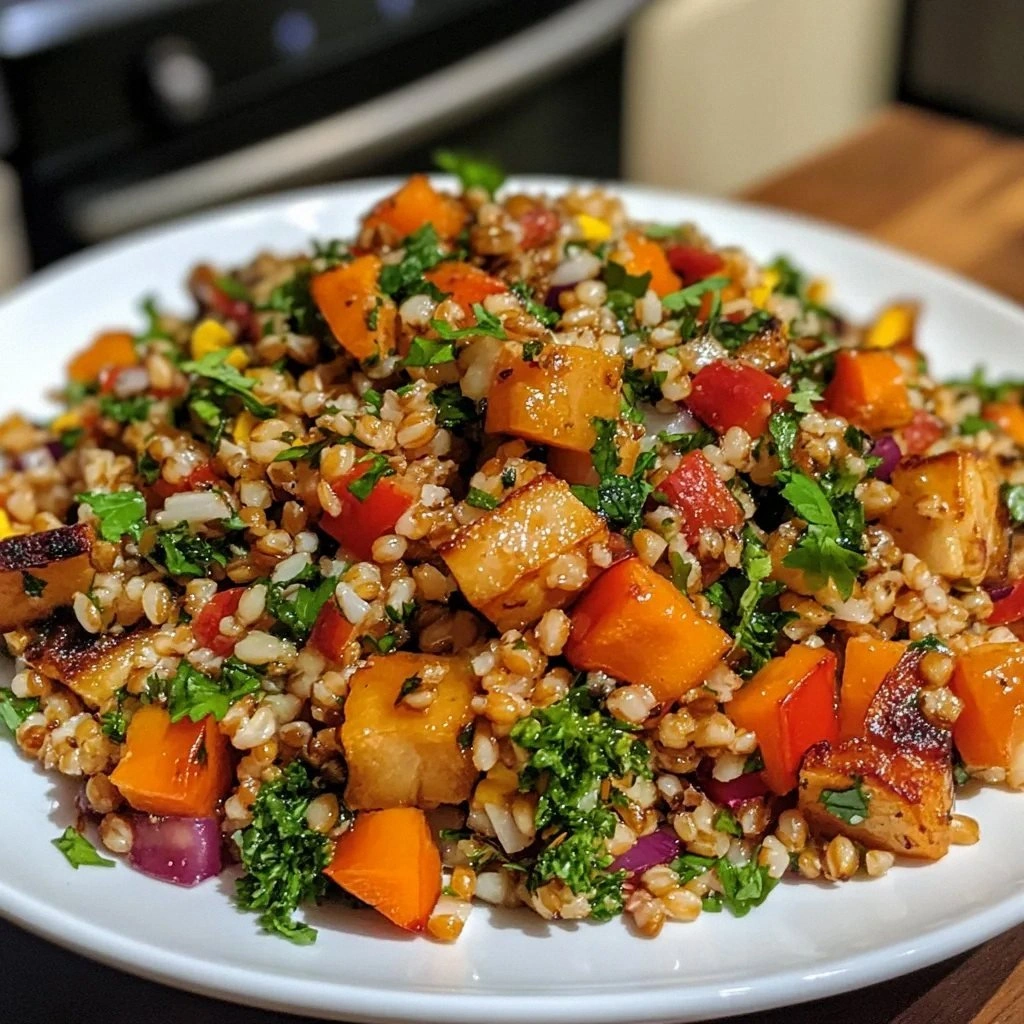
Picture this: I’m standing in my kitchen, the air thick with the scent of caramelized onions and roasted root vegetables, when my phone buzzes with a frantic text from a friend. “I’m at a party and I need a dish that screams fall without being a boring bowl of soup,” she says. I’m already craving something comforting yet surprising, a dish that can be tossed together in minutes but still feels like a masterclass in flavor. That moment sparked the creation of the Fall Harvest Grain Salad—a vibrant, hearty bowl that turns humble ingredients into a celebration of autumn’s bounty.
I remember the first time I tried this recipe. The barley was perfectly chewy, the roasted butternut squash was sweet enough to make my eyes water, and the Brussels sprouts had that deep, caramelized crunch that only a good oven roast can give. The balsamic drizzle didn’t just add acidity; it wrapped everything in a glossy, almost velvety coat that made every bite feel like a new discovery. That sizzle when the veggies hit the pan? Absolute perfection. I dared anyone to taste this and not go back for seconds—challenge accepted.
What sets this version apart from the countless grain salads you’ll find online is the balance of textures and the intentional layering of flavors. The barley acts like the sturdy foundation, absorbing the balsamic while providing a satisfying bite. The roasted veggies bring smoky sweetness, while the pumpkin seeds add a nutty crunch that punctuates each forkful. The optional cranberries provide a pop of tartness that cuts through the richness, creating a dynamic palate. And the best part? It’s all made in one pot, with a single pan for roasting, so cleanup is a breeze.
I’ll be honest—when I first served this to my friends, I ate half the batch before anyone else got to try it. The crowd reaction was immediate: “This is hands down the best version you’ll ever make at home.” They kept asking for the secret sauce, the one that made the grains so moist and the veggies so caramelized. I’ve been saving that secret for you, because I know you’ll want to replicate that exact mouthfeel in your own kitchen.
Picture yourself pulling this out of the oven, the whole kitchen smelling incredible, the colors of orange, red, and green dancing in the light. The moment you scoop a spoonful, the warmth spreads through your hands, and the aroma of roasted squash and pepper greets you like a cozy hug. This isn’t just a salad; it’s a seasonal statement, a dish that turns your dining table into a gallery of autumnal art. Let me walk you through every single step—by the end, you’ll wonder how you ever made it any other way.
What Makes This Version Stand Out
- Barley: The chewy, nutty grain forms the backbone of the dish, offering a satisfying bite that contrasts beautifully with the silky roasted veggies.
- Roasting: By roasting the squash, sweet potatoes, and Brussels sprouts, we unlock deep caramelization that adds a smoky sweetness you won’t find in boiled or steamed versions.
- Balsamic: The acid and sweetness of the balsamic vinegar tie every component together, creating a glossy, flavorful glaze that coats each grain.
- Pumpkin Seeds: These add a crunchy, nutty element that elevates the dish from simple to spectacular.
- Optional Cranberries: A burst of tartness that cuts through richness and adds a pop of color, making the salad visually stunning.
- Make‑ahead Friendly: The salad can be assembled ahead of time and chilled, allowing flavors to meld while saving you prep time on busy nights.
- Balanced Nutrition: Packed with protein, fiber, and healthy fats, it’s a wholesome meal that satisfies without compromising on taste.
- Versatility: Serve it as a main course, a side, or even a lunchbox staple; it adapts to any dining scenario.
Alright, let’s break down exactly what goes into this masterpiece…
Inside the Ingredient List
The Flavor Base
Barley is the star of the show. Its chewy texture and nutty flavor provide a hearty foundation that can hold up to the boldness of roasted vegetables and the tang of balsamic. If you skip barley, the salad becomes light and lacks that satisfying chew. You can swap barley for quinoa or farro if you prefer a different grain profile, but the chewy texture will be slightly different.
Water is essential for cooking the barley to perfection. Use cold tap water or filtered water; avoid boiling it for too long, as that can make the grains mushy. A good rule of thumb is to simmer barley for about 30 minutes, checking for tenderness. If you’re in a hurry, you can pre‑cook the barley in a rice cooker or instant pot, saving you 10 minutes of stove time.
The Texture Crew
Butternut squash brings a sweet, creamy component that melts in your mouth. Its natural sugars caramelize during roasting, creating a glossy, almost caramel-like coating. If you omit squash, the salad loses its sweet depth; the dish becomes more savory. For a lower-carb option, consider using a smaller portion of squash or replacing it with roasted carrots.
Sweet potatoes add a robust sweetness and a boost of nutrients, especially beta‑carotene. Their dense texture holds up well during roasting, maintaining a pleasant bite. Skipping them will make the salad lighter but also less flavorful. If you’re allergic to sweet potatoes, you can use parsnips or turnips as a substitute.
Red bell pepper offers a fresh, crunchy pop of color and a mild sweetness that balances the earthy flavors of squash and sweet potatoes. Its bright hue makes the dish visually striking. If you don’t have a red bell pepper on hand, any bell pepper color works, though the color palette will change slightly.
Brussels sprouts, when roasted, become tender and caramelized, adding depth and a slightly bitter edge that cuts through the sweetness. They also bring a pleasant crunch and a pop of green that brightens the plate. If you’re not a fan of sprouts, you can replace them with broccoli florets or cauliflower; just be mindful that the texture and flavor profile will shift.
The Unexpected Star
Pumpkin seeds are the crunchy, nutty element that gives the salad a satisfying bite. Their subtle, earthy flavor complements the roasted veggies and the grain. If you’re allergic to pumpkin seeds, sunflower seeds or chopped walnuts can work as a substitute, though the crunch will differ.
Dried cranberries add a touch of sweetness and a burst of color. They’re optional, but they bring a tart contrast that brightens the overall flavor. If you prefer a less sweet version, you can omit them or use fresh cranberries, which will add moisture.
The Final Flourish
Olive oil is the key to roasting the veggies beautifully. It helps caramelize the surface and adds healthy fats that enhance the overall mouthfeel. Use a good quality extra virgin olive oil for the best flavor. If you’re looking to reduce calories, a light olive oil or a drizzle of avocado oil works too.
Salt and pepper are simple seasonings that elevate the flavors of the ingredients. The right amount of salt brings out the natural sweetness of the squash and sweet potatoes, while pepper adds a subtle heat. If you’re watching sodium, you can reduce the salt and use a pinch of sea salt at the end.
Balsamic vinegar ties all the flavors together, making each bite irresistible. Its acidity cuts through the richness of the roasted veggies and the grains, while its natural sweetness balances the savory elements. If you’re not a fan of balsamic, you can use red wine vinegar with a splash of honey, but the flavor profile will shift.
Everything’s prepped? Good. Let’s get into the real action…
The Method — Step by Step
- Start by rinsing 2 cups of barley under cold water, then place it in a pot with 4 cups of water. Bring to a boil, reduce heat, cover, and let simmer for 30 minutes until tender. Check for doneness by tasting a grain; it should be chewy but not mushy. Drain any excess liquid and set aside. This step ensures the barley absorbs the flavors later.
- While the barley cooks, preheat your oven to 425°F (220°C). On a large baking sheet, spread 2 cups of diced butternut squash, 2 cups of diced sweet potatoes, 1 cup of sliced red bell pepper, and 2 cups of halved Brussels sprouts. Drizzle with 3 tablespoons of olive oil, sprinkle with salt and pepper, then toss until everything is evenly coated. Arrange the veggies in a single layer to promote even roasting.
- Roast the vegetables for 25–30 minutes, stirring halfway through. The edges should start pulling away and the surfaces should develop a golden, caramelized crust. The smell of roasted root vegetables is the first hint that the salad is almost ready. Keep an eye on the Brussels sprouts; they should not burn.
- In a small bowl, whisk together 2 tablespoons of balsamic vinegar with a pinch of salt. This will be your dressing. The acidity of the balsamic will brighten the dish and give the grains a glossy finish.
- Transfer the cooked barley to a large mixing bowl. Add the roasted veggies, 0.5 cup of pumpkin seeds, and, if using, 0.25 cup of dried cranberries. Pour the balsamic dressing over the mixture and toss gently until everything is evenly coated. The dressing should cling to each grain and veggie, creating a unified flavor.
- Taste the salad and adjust seasoning with additional salt or pepper if needed. Remember, the grains absorb some of the salt during cooking, so adjust accordingly. The final dish should have a balanced savory, sweet, and acidic profile.
- Serve immediately, or let it cool to room temperature and refrigerate for up to 3 days. If you’re making it ahead, keep it chilled; the flavors will deepen over time. When ready to serve, give it a quick toss to redistribute the dressing.
- Optional: Finish with a drizzle of olive oil and a sprinkle of freshly cracked pepper before serving. This adds an extra layer of aroma and texture.
That’s it— you did it. But hold on, I’ve got a few more tricks that’ll take this to another level. These are the subtle touches that separate a great salad from a legendary one.
Insider Tricks for Flawless Results
The Temperature Rule Nobody Follows
Many people roast veggies at 400°F, but that can leave them under‑caramelized. By bumping the heat to 425°F, you encourage a Maillard reaction that deepens the flavor profile. Keep a close eye on the vegetables; the goal is a golden crust without burning. This small tweak makes the difference between “good” and “great” in terms of caramelization.
Why Your Nose Knows Best
Before you toss the veggies, give them a quick sniff. If the aroma is sweet and slightly nutty, they’re ready to go into the oven. Smell is a reliable indicator of proper roasting. If the scent is raw or under‑cooked, give them a few more minutes. Your nose is a better judge than the clock.
The 5‑Minute Rest That Changes Everything
After roasting, let the vegetables sit for five minutes before mixing with the barley. This pause allows the heat to distribute evenly, ensuring each bite is consistent. It also gives the caramelized edges a chance to settle, preventing them from cracking during the toss. A quick rest can elevate the overall texture.
The Secret of the Balsamic Finish
Balsamic vinegar should be added at the very end, not during roasting. Adding it too early can cause it to evaporate, losing its depth. A quick whisk with a splash of olive oil creates a glossy dressing that clings to every grain and veggie. The result is a cohesive, flavorful bite.
The Power of Fresh Herbs
A handful of chopped fresh parsley or basil added after tossing brightens the dish with a fresh, herbaceous note. It also adds a pop of color that contrasts nicely with the autumn palette. If you’re vegan, a sprinkle of nutritional yeast can add a cheesy, umami kick.
Creative Twists and Variations
This recipe is a playground. Here are some of my favorite ways to switch things up:…
Mediterranean Vibes
Swap the balsamic for a lemon‑yolks vinaigrette and add chopped kalamata olives. The briny olives give a Mediterranean flair, while the lemon brightens the dish. Serve with warm pita bread for a complete meal.
Spicy Autumn
Add a pinch of crushed red pepper flakes during roasting and finish with a drizzle of sriracha‑infused olive oil. The heat complements the natural sweetness of the squash and sweet potatoes. This version is perfect for those who love a little kick.
Vegan Powerhouse
Omit the optional cranberries and add a handful of roasted chickpeas for extra protein. Chickpeas also add a satisfying crunch. This variation is ideal for plant‑based diners who want a filling, nutrient‑dense dish.
Breakfast Boost
Serve the salad warm with a side of poached eggs or a splash of maple syrup. The sweet syrup complements the roasted veggies, while the eggs add a rich, savory element. This makes for a hearty breakfast that’s both sweet and savory.
Holiday Touch
Add a handful of toasted pecans and a sprinkle of dried apricots. The nutty crunch and dried fruit sweetness make it a festive centerpiece for Thanksgiving or holiday gatherings.
Storing and Bringing It Back to Life
Fridge Storage
Store the salad in an airtight container for up to 3 days. The grains and veggies keep well, and the dressing remains vibrant. When you’re ready to eat, give it a quick stir to redistribute the dressing.
Freezer Friendly
The salad can be frozen for up to 2 weeks. Pack it in a freezer‑safe bag, removing excess air. Thaw overnight in the fridge, then stir and add a splash of olive oil to revive the texture.
Best Reheating Method
Reheat the salad in a skillet over medium heat for 5 minutes, stirring occasionally. Add a tiny splash of water or broth to steam back to perfection. This method keeps the grains from drying out and restores the vibrant flavors.