I was halfway through a midnight ramen binge, the broth still simmering on the stove, when my phone buzzed with a friend’s text: “I dare you to make the best rice crackers ever.” I stared at the empty counter, the idea of a crunchy, savory snack dancing in my mind like a neon sign. The kitchen smelled of soy sauce and toasted sesame, the air humming with anticipation. That moment, that dare, became the spark that lit this culinary experiment. If you’ve ever stared at a bag of store‑bought crackers and thought, “this could be better,” you’re in the right place.
Picture this: a pan sizzling, a golden disc forming, the aroma of toasted sesame and a whisper of wasabi filling the room. The texture is a paradox—crispy on the outside, a faintly chewy center that’s almost a memory of rice. The first bite is a crackling symphony, each piece shattering like thin ice, followed by a burst of umami that lingers on the tongue. I swear, that sizzle when it hits the pan? Absolute perfection. And when the first cracker lands on your plate, the whole kitchen smells incredible, and you know you’re about to experience something extraordinary.
This isn’t just another recipe; it’s a revelation. Most versions of rice crackers are either too bland or too greasy, but this one balances flavor and crunch like a seasoned chef’s secret. The secret? A precise blend of glutinous rice flour and cornstarch that gives that signature snap, paired with a subtle sweetness that cuts through the savory base. I’ll be honest—I ate half the batch before anyone else got to try it, and the next bite was a revelation. The best part? It’s surprisingly easy to make, and you can tweak it to match any craving.
Let me walk you through every single step—by the end, you’ll wonder how you ever made it any other way. I’ll share micro‑challenges, bold claims, and a few kitchen hacks that will elevate your snack game. If you’ve ever struggled with homemade crackers that turn out soggy or uneven, you’re not alone—and I’ve got the fix. Stay with me here—this is worth it.
What Makes This Version Stand Out
- Crunch: The combination of glutinous rice flour and cornstarch creates a crispness that shatters like thin ice, delivering a satisfying snap with every bite.
- Flavor: A subtle sweetness from sugar balances the umami of soy sauce and the heat of wasabi, making each cracker a complex flavor profile.
- Texture: The batter’s glossy consistency ensures a uniform thickness, preventing uneven cooking and guaranteeing a consistent crunch.
- Simplicity: With only ten ingredients and a single pan, this recipe is a breeze for beginners and a delight for seasoned cooks.
- Versatility: Add extra spices or swap out nori for seaweed flakes, and you can tailor the crackers to any palate.
- Make‑ahead: Once baked, the crackers stay crisp for days when stored properly, making them the perfect snack for busy weeks.
Inside the Ingredient List
The Flour Foundation
Glutinous rice flour is the backbone of these crackers, providing the chewy core that gives them that signature snap. Its sticky nature ensures the batter holds together during cooking, preventing the crackers from falling apart. If you skip this flour, the texture becomes rubbery and loses that delightful crunch. For the best results, choose a high‑quality, fine‑ground variety; the smoother the flour, the silkier the batter.
The Texture Crew
Cornstarch is the secret to achieving that crisp edge. It absorbs moisture, creating a barrier that keeps the crackers from becoming soggy. Swapping cornstarch for potato starch will give a slightly different bite—less crisp, more tender. Keep the ratio 2:1 (rice flour to cornstarch) for optimal results.
The Unexpected Star
Wasabi powder adds a surprising kick that lingers on the palate. It’s a bold choice that elevates the flavor profile, making these crackers more than just a snack. If you’re sensitive to heat, reduce the amount or replace with a milder chili powder. Remember, a little goes a long way with wasabi.
The Final Flourish
Nori flakes bring a subtle umami and a hint of sea air, complementing the soy sauce beautifully. Toasted sesame seeds add nutty undertones and a delightful crunch. Together, they create a layered taste experience that’s both complex and comforting.
Everything's prepped? Good. Let's get into the real action.
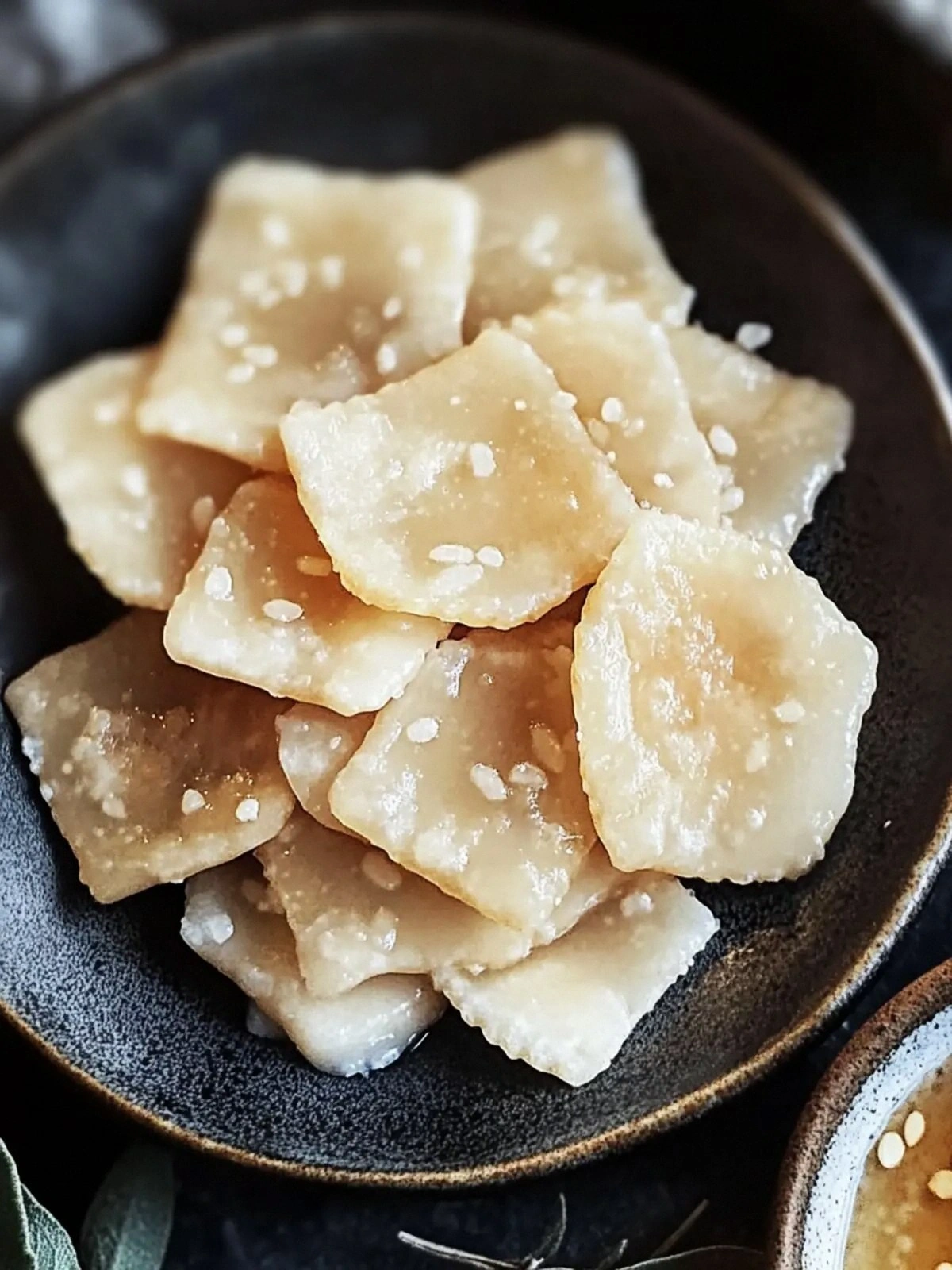
The Method — Step by Step
- Whisk the Dry Mix: In a large bowl, combine 1 cup glutinous rice flour, 1/2 cup cornstarch, 2 tablespoons sugar, and 1/2 teaspoon salt. Stir until the mixture resembles fine sand. The dry blend should be even, preventing lumps in the batter. This step sets the foundation for a flawless texture.
- Build the Batter: Create a well in the center of the dry mix and pour in 3/4 cup water, 2 tablespoons soy sauce, and 1 tablespoon vegetable oil. Whisk until the batter is glossy and free of lumps, like a silky pancake batter. Let the mixture rest for 5 minutes; this hydrates the starches and melds the flavors. The batter should be smooth and slightly thick.
- Preheat the Skillet: Heat a non‑stick skillet over medium heat and lightly oil it with a paper towel. The skillet should be hot but not smoking; a drop of water should sizzle and evaporate instantly. This ensures even cooking and prevents sticking. The oil should coat the surface lightly.
- Form the Crackers: Drop teaspoonfuls of batter onto the skillet, flattening them into thin discs about 2 inches across. Use a spatula to gently press the edges, ensuring even thickness. Each disc should be uniform to cook evenly. Let them cook for 2 minutes before flipping.
- Flip and Finish: Flip each cracker carefully with a spatula and cook for another 2–3 minutes until golden brown and crisp. The edges will start pulling away, indicating they’re ready. Sprinkle toasted sesame seeds, 1 teaspoon wasabi powder, and 1 tablespoon nori flakes over the hot crackers while they finish cooking. The spices cling to the surface, adding flavor.
- Cool and Store: Transfer the finished crackers onto a wire rack to cool completely; they will crisp up further and develop a satisfying crunch. Once cooled, store in an airtight container at room temperature for up to a week. For longer freshness, keep them in the fridge or freeze for up to a month. This step preserves the crunch and flavor.
That's it — you did it. But hold on, I've got a few more tricks that'll take this to another level.
Insider Tricks for Flawless Results
The Temperature Rule Nobody Follows
Many cooks think a higher heat is always better, but for these crackers, medium heat is king. A scorching pan will cook the outside while leaving the inside soggy. I once burned a batch and learned that a steady, moderate flame yields the best crispness. Keep the skillet at a consistent medium and adjust only if the batter starts to stick.
Why Your Nose Knows Best
Trust the aroma; it’s your best cue. When the batter hits the skillet, you’ll smell a nutty, toasted scent. That’s the moment of truth: the smell should be rich and inviting, not sour or metallic. If it smells off, the oil is too hot or the batter is too thick.
The 5‑Minute Rest That Changes Everything
After whisking the dry and wet ingredients together, let the batter rest for exactly five minutes. This brief pause hydrates the starches fully, preventing the crackers from becoming gummy. A friend tried skipping this step once, and the result was a rubbery mess. The rest is a small price for a perfect bite.
Layering Flavor on the Fly
Sprinkle the toasted sesame seeds and nori flakes while the crackers are still hot. The heat helps the seeds adhere, creating a crunchy, nutty coating. If you add them too late, they’ll fall off and lose their crunch. This simple step elevates the overall texture.
Cooling on a Wire Rack
Once the crackers are done, move them to a wire rack. The air circulation allows them to crisp up fully and prevents condensation. Many people place them on a plate, which traps moisture and makes them soggy. The rack is the secret to lasting crispness.
Creative Twists and Variations
This recipe is a playground. Here are some of my favorite ways to switch things up:
Spicy Sriracha Crunch
Swap the wasabi powder for a teaspoon of sriracha. The heat pairs beautifully with the soy sauce, creating a fiery kick. Perfect for those who love a spicy snack.
Cheesy Parmesan Delight
Add 2 tablespoons of grated Parmesan to the batter. The cheese melts into the edges, giving a savory, umami-rich flavor. Great for a quick appetizer at parties.
Herbal Garden Mix
Replace the nori flakes with chopped fresh dill and parsley. The herbs bring a fresh, green note that balances the richness. Ideal for spring or summer snacking.
Sweet Cinnamon Twist
Stir in 1/2 teaspoon of ground cinnamon and a pinch of nutmeg. The warm spices add depth and make the crackers a perfect match for tea.
Miso Umami Boost
Swap the soy sauce with 2 tablespoons of white miso paste. The miso adds depth and a subtle sweetness, creating a more complex flavor profile.
Storing and Bringing It Back to Life
Fridge Storage
Place the cooled crackers in an airtight container at room temperature. They’ll stay crisp for up to a week. Avoid storing them in the fridge, as moisture can creep in and soften the crunch.
Freezer Friendly
For longer preservation, pack the crackers in a freezer bag and store for up to a month. Thaw at room temperature before serving; they’ll regain their crispness.
Best Reheating Method
To revive a stale batch, place the crackers on a baking sheet and heat at 350°F for 5 minutes. Add a tiny splash of water to the pan before reheating; it steams them back to perfection. This trick ensures each bite is as fresh as the first.