I was standing in my kitchen, the air thick with the scent of burnt garlic from the last attempt at a “Cajun Mac & Cheese” that had turned into a smoky disaster. The pan was blackened, the cheese had clumped like a stubborn toddler, and I could hear the hiss of a burnt sauce that could have been a fire alarm. That moment was the spark that lit my culinary curiosity, turning frustration into a daring experiment that would become a game‑changer for the family. I vowed to craft a version that would not only taste better but also look like a masterpiece on a plate.
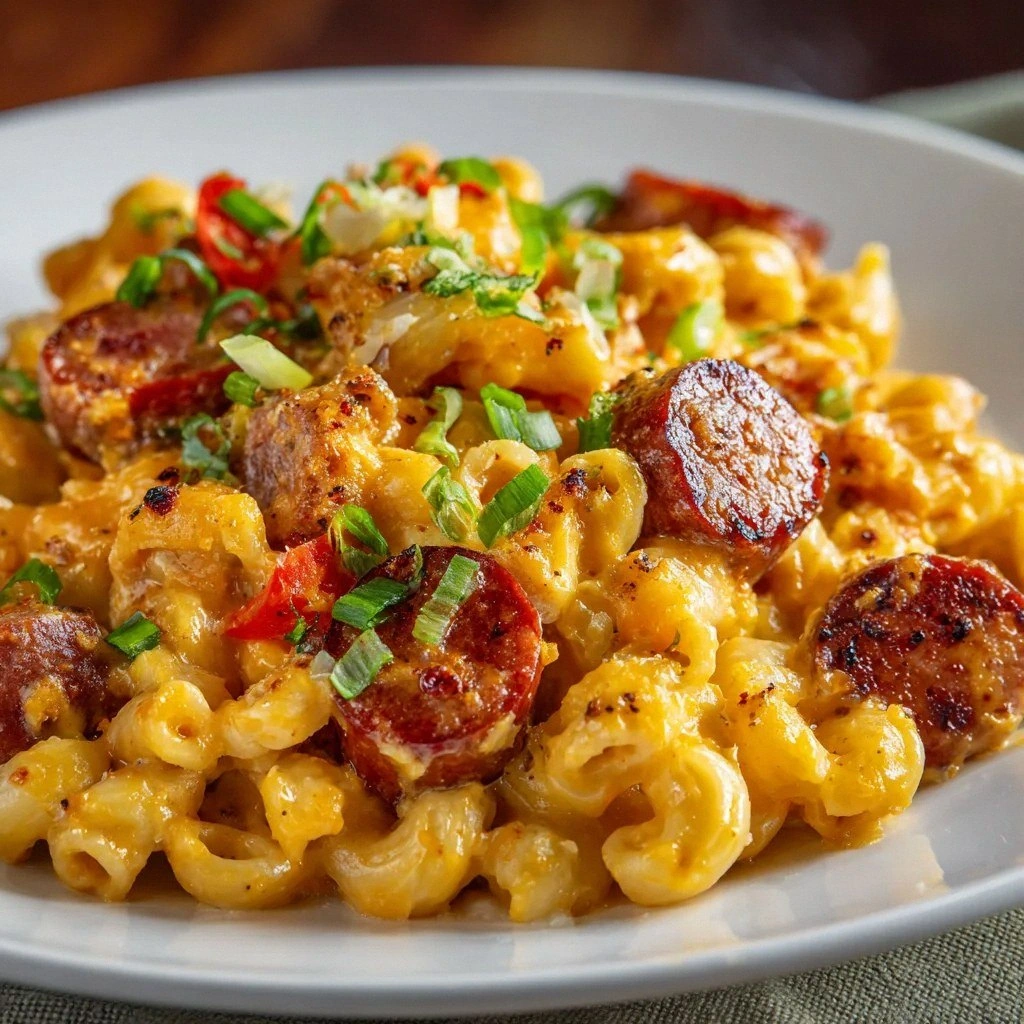
Picture this: a steaming bowl of elbow macaroni, each noodle coated in a velvety, golden cheddar sauce that shimmers like liquid gold. The sausage, sliced into thin rounds, offers a smoky crunch that bursts with every bite, while the Cajun seasoning sneaks a fiery whisper into the mix. The aroma is a comforting blend of butter, garlic, and peppered heat that wafts through the kitchen, making the air feel like a cozy Southern kitchen. The sound of the sauce simmering is a gentle, rhythmic lullaby that promises a satisfying finish.
What makes this recipe stand out is the meticulous layering of flavors and textures that create a symphony on your palate. The cheese sauce is not just creamy; it’s a silky, buttery embrace that clings to each noodle, turning a humble pasta dish into a luxurious comfort food. The Andouille sausage is the star, its smoky, spicy profile adding depth that most mac‑and‑cheese recipes lack. The balance of heat from the Cajun seasoning and the subtle sweetness from the caramelized onions (if you choose to add them) creates a complex flavor profile that keeps you coming back for more.
I dare you to taste this and not go back for seconds. The first bite delivers a comforting hit of cheddar, the second one is a burst of smoky sausage, and the third one is a lingering spicy finish that leaves your taste buds humming. Most recipes get this completely wrong by over‑cooking the pasta or using a bland cheese blend. Here, the sauce is thick yet pourable, and the noodles are al dente, each bite a perfect bite‑size balance of texture and flavor.
If you've ever struggled with a soggy mac or a burnt cheese sauce, you're not alone. I’ve been there, and I’ve learned the tricks that make this dish shine. The secret lies in the timing, the right mix of fats, and the bold use of Cajun spices that elevate the dish from ordinary to unforgettable. The result is a dish that looks like it belongs in a fancy restaurant but tastes like home‑cooked comfort.
Picture yourself pulling this out of the oven, the whole kitchen smelling incredible, and the family’s eyes lighting up as they see the golden crust. That moment of triumph is the culmination of careful preparation and a few key techniques that I’m about to share with you. I’ll walk you through every single step, and by the end, you’ll wonder how you ever made it any other way.
Okay, ready for the game‑changer? Let’s dive into the ingredients that make this dish a showstopper. Every component has been chosen to maximize flavor, texture, and ease of preparation. I’ll break down each ingredient group, explaining why it matters and what happens if you skip it. You’ll also find swaps and alternatives that keep the dish flexible for different dietary needs.
First, we have the Flavor Base: elbow macaroni, Andouille sausage, and a generous amount of sharp cheddar cheese. These are the core elements that deliver the hearty, comforting foundation of the dish. The elbow shape is perfect for holding the sauce, while the sausage adds a smoky, spicy kick that wakes up the palate. The sharp cheddar provides a bold, tangy flavor that balances the richness of the sauce.
Next up is the Texture Crew: milk, heavy cream, butter, and all‑purpose flour. These ingredients create the luscious, silky sauce that coats the pasta like velvet. Milk and cream give the sauce depth and creaminess, while butter adds richness and a subtle sheen. Flour, combined with butter, forms a roux that thickens the sauce without adding graininess.
The Unexpected Star is the Cajun seasoning, garlic powder, and onion powder trio. This blend of spices brings a subtle heat and aromatic depth that transforms a simple mac‑and‑cheese into a Southern comfort dish. The Cajun seasoning is the secret weapon that adds a fiery punch without overpowering the cheese. Garlic and onion powders provide a savory base that complements the sausage.
Finally, the Final Flourish: salt and pepper. These are the finishing touches that bring all the flavors together. Salt enhances the richness of the cheese and the smokiness of the sausage, while pepper adds a gentle heat that rounds out the dish. A pinch of each is enough to elevate the dish to gourmet status.
Everything's prepped? Good. Let's get into the real action. This is where the magic happens, and you’ll see why this recipe is a crowd‑pleaser at every dinner table. I’ll guide you through each step, ensuring you’re never left guessing what to do next.
Kitchen Hack: Use a cast‑iron skillet for the sauce. It distributes heat evenly, prevents sticking, and gives the cheese a beautiful, slightly crispy edge that adds texture. If you’re short on time, pre‑slice the sausage and sauté it first; this releases its oils and flavors into the pan, setting the base for the sauce.
The Flavor Base is crucial because it forms the heart of the dish. The elbow macaroni is chosen for its ability to hold sauce, and the Andouille sausage adds a smoky, spicy dimension that many mac‑and‑cheese recipes lack. If you skip the sausage, the dish becomes a plain cheesy pasta, missing the bold Southern flare. For a lighter option, try turkey sausage or a spicy pepperoni.
The Texture Crew ensures the sauce is silky and not gritty. Milk and heavy cream together create a smooth base, while butter provides richness. The flour, when combined with butter to form a roux, thickens the sauce without making it thick and clumpy. If you’re gluten‑free, substitute the flour with cornstarch or a gluten‑free blend.
The Unexpected Star spices are the secret to this dish’s personality. The Cajun seasoning brings heat and depth, while garlic and onion powders add savory layers. If you prefer a fresher taste, use minced garlic and finely chopped onions, but be prepared for a slightly different texture. The spices also help balance the richness of the cheese and the fat from the sausage.
The Final Flourish of salt and pepper is where the dish gets that final pop. Salt enhances all the flavors, and pepper adds a subtle kick. Be mindful not to over‑salt; taste as you go. A pinch of black pepper is enough to complement the Cajun heat without overpowering the dish.
Fun Fact: The origin of Andouille sausage dates back to French settlers in Louisiana who adapted the recipe using local pork and spices. The word “Andouille” means “small intestine” in French, a nod to the sausage’s traditional casing. This heritage adds a layer of authenticity to the dish.
Everything’s ready. The next step is to bring the sauce to life. The method is straightforward but requires attention to detail. Let’s walk through each step, and I’ll share some insider tips along the way.
1. Cook the pasta. Bring a large pot of salted water to a boil and cook the elbow macaroni according to the package instructions until al dente. Drain and set aside, reserving a cup of pasta water to adjust the sauce consistency later. The pasta should be firm to the bite, providing a sturdy base for the sauce.
2. Sauté the sausage. In a large skillet over medium heat, add the sliced Andouille sausage. Cook until browned and slightly crispy, about 5 minutes. The sausage will release its oils, which become the flavor foundation for the sauce.
3. Make the roux. Reduce the heat to low, add the butter, and let it melt. Sprinkle the flour over the butter and stir continuously for 1-2 minutes until the mixture turns a light golden color. This roux thickens the sauce without a grainy texture.
4. Build the sauce. Slowly pour in the milk and heavy cream while whisking vigorously to avoid lumps. Add the Cajun seasoning, garlic powder, and onion powder. Keep whisking until the mixture is smooth and starts to thicken.
5. Add the cheese. Lower the heat and stir in the sharp cheddar cheese in small handfuls, allowing each addition to melt fully before adding the next. The cheese should be fully incorporated, creating a silky, glossy sauce.
6. Combine pasta and sauce. Return the cooked pasta to the skillet and toss to coat it evenly with the sauce. If the sauce is too thick, add reserved pasta water a tablespoon at a time until the desired consistency is achieved. The pasta should be coated but not drowned.
7. Season to taste. Add salt and pepper, tasting as you go. The seasoning should be balanced, enhancing the flavors without dominating. Adjust the Cajun seasoning if you prefer a spicier dish.
8. Bake for a crisp finish. Preheat the oven to 375°F (190°C). Transfer the mac and cheese to a greased baking dish, sprinkle a handful of shredded cheddar on top, and bake for 15-20 minutes until the top is golden and bubbly. The crust adds a delightful crunch that contrasts the creamy interior.
9. Let it rest. Remove from the oven and let the dish rest for 5 minutes before serving. This allows the flavors to meld and the cheese to set, ensuring a cohesive bite.
10. Serve and enjoy. Plate the dish, garnish with fresh parsley or a sprinkle of extra Cajun seasoning if desired. The result is a comforting, spicy mac‑and‑cheese that’s sure to win over any crowd.
Watch Out: Don’t overcook the pasta. Over‑cooked noodles become mushy, making the sauce clump and lose its silky texture. Keep a close eye on the pasta and taste it a minute before the package instructions say it’s done.
Kitchen Hack: Use a silicone mat on the baking sheet. It prevents the cheese from sticking and ensures an even bake. If you’re short on time, you can skip the baking step and serve it directly from the skillet; the dish will still be delicious.
Insider Trick #1: The Temperature Rule Nobody Follows. Keep the sauce on low heat after adding the cheese to prevent it from separating. A gentle simmer allows the cheese to melt smoothly into the sauce.
Insider Trick #2: Why Your Nose Knows Best. The aroma of the sauce can tell you when it’s ready. When it smells toasty and buttery, it’s time to add the cheese.
Insider Trick #3: The 5-Minute Rest That Changes Everything. Letting the dish sit after baking allows the flavors to meld, resulting in a richer, more cohesive taste.
Insider Trick #4: Use a mix of cheeses. Adding mozzarella or Gruyère to the cheddar blend creates a creamier texture and a deeper flavor profile.
Insider Trick #5: Keep the sauce from separating. If the sauce looks thickened but has a thin layer of liquid on top, stir vigorously to reincorporate the liquid.
Kitchen Hack: Use a small amount of lemon juice. Adding a splash of lemon juice right before serving brightens the flavors and balances the richness.
Creative Twist #1: Spicy Gouda Upgrade. Swap cheddar for smoked Gouda for a deeper, smoky flavor that pairs beautifully with the sausage.
Creative Twist #2: Vegetarian Vibe. Omit the sausage and add sautéed mushrooms and bell peppers for a hearty, plant‑based version.
Creative Twist #3: Breakfast Boost. Add a few scrambled eggs to the mix for a protein‑rich brunch dish.
Creative Twist #4: Low‑Calorie Version. Use low‑fat cheese and skim milk to reduce calories while keeping the flavor intact.
Creative Twist #5: Gluten‑Free Delight. Swap elbow macaroni for gluten‑free pasta and use a gluten‑free flour blend for the roux.
Creative Twist #6: Cheesy Crust. Top the dish with breadcrumbs mixed with melted butter for a crunchy, golden crust.
Storing and Bringing It Back to Life – Fridge Storage. Store leftovers in an airtight container in the refrigerator for up to 3 days. Reheat gently in the microwave, stirring occasionally, and add a splash of milk to restore creaminess.
Storing and Bringing It Back to Life – Freezer Friendly. Freeze the dish in a freezer‑safe container for up to 2 weeks. Thaw overnight in the refrigerator and reheat in the oven at 350°F (175°C) until hot, adding a little water or milk to keep it moist.
Storing and Bringing It Back to Life – Best Reheating Method. The best way to reheat is in a covered skillet over low heat, stirring until the sauce is smooth. A tiny splash of water before reheating steams the dish back to perfection.